Two Wheels, Zero Gridlock: The Case for Riding a Classic Bike to Work Every Day
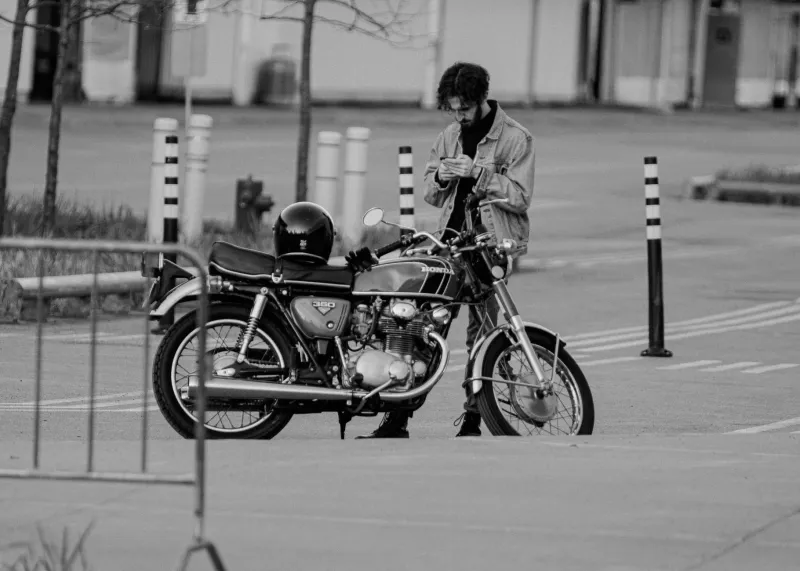
It's 7:43 on a Tuesday morning somewhere on the outskirts of Atlanta. Marcus Webb, a 41-year-old civil engineer, is already at his desk with a coffee in hand. His commute took nineteen minutes. His coworker, who lives four miles closer to the office, is still sitting on I-285, watching a podcast and slowly losing the will to live.
Marcus didn't take a secret shortcut. He didn't leave at 5 a.m. He rode his 1974 Honda CB550 — a bike he bought for $2,200 from a retired schoolteacher in Decatur — and he hasn't looked back since.
"I used to dread Mondays," he says. "Now I actually look forward to them. The ride in sets the tone for the whole day."
Marcus isn't alone. Across the country, a quiet but growing contingent of commuters is trading bumper-to-bumper misery for the open lane — and doing it on machines that were built before most of their coworkers were born.
The Math Nobody Talks About
Let's start with the boring stuff, because it's actually pretty interesting. A vintage motorcycle from the early-to-mid 1970s — your CB series Hondas, your Kawasaki KZ400s, your Triumph Bonneville T140s — typically weighs between 350 and 450 pounds and runs a parallel-twin or inline-four engine displacing somewhere between 350cc and 750cc. These aren't powerhouses by modern standards. But for getting from point A to point B in a city or suburb, they're almost absurdly well-suited.
Fuel economy on a well-tuned CB550 or a Yamaha XS650 hovers anywhere from 45 to 65 miles per gallon, depending on how you ride and how well the carbs are dialed in. Compare that to the average American car — currently sitting around 28 mpg — and you're looking at a real, tangible savings that adds up fast, especially if you're putting on 80 or 100 miles a week just getting to work.
Parking is the other piece of the puzzle that doesn't get enough credit. In cities like Chicago, Boston, or San Francisco, monthly parking can run $200 to $400. A motorcycle takes up roughly a third of a car's footprint, which means urban garages often charge a fraction of the rate — or nothing at all, if you're creative about where you put it.
The Philosophical Argument (Bear With Us)
Okay, numbers aside, there's something harder to quantify happening here — and it might actually be the bigger draw.
American commuting culture has spent decades optimizing for comfort and insulation. Climate control, noise cancellation, infotainment systems — modern cars are essentially rolling living rooms designed to make you forget you're traveling. And for a lot of people, that's made the commute feel like dead time. You're not really going anywhere; you're just waiting to arrive.
Riding a vintage motorcycle flips that entirely. You're in the commute. Wind, temperature, road texture, the smell of rain on asphalt — it all reaches you. Your hands are busy, your eyes are scanning, your brain is engaged. Some riders describe it as a form of moving meditation. Others just say it wakes them up better than coffee.
There's a term floating around in urban planning and lifestyle circles — "slow commuting" — that captures part of this. The idea isn't necessarily about being slow in miles per hour; it's about being present during the journey rather than just enduring it. Vintage bike riders have been doing this instinctively for years without needing a label for it.
"You can't zone out on a motorcycle," says Diana Reyes, a 36-year-old marketing director in Portland who commutes on a 1979 Triumph Bonneville she restored over two winters. "Which sounds stressful if you've never done it, but it's actually the opposite. You get to work and your head is clear. You've already been alert and present for 25 minutes. It's a completely different headspace than sitting in traffic watching your GPS recalculate."
What Kind of Bike Actually Works for Daily Use?
Not every classic is cut out for commuting duty, and it's worth being honest about that. A rare Italian single from the 1960s that needs a full tune-up every 500 miles probably shouldn't be your daily rider. Neither should anything so valuable that a parking lot ding would ruin your month.
The sweet spot tends to be the Japanese UJMs — Universal Japanese Motorcycles — from the early 1970s through the mid-1980s. Honda's CB series, Kawasaki's KZ line, Yamaha's XS twins, Suzuki's GS models. These bikes were engineered for reliability and ease of maintenance, built in enormous numbers, and have a parts supply that's still remarkably healthy decades later. You can find them for $1,500 to $4,000 depending on condition, and a competent home mechanic can keep them running without exotic tools or dealer support.
British twins — Triumphs, BSAs, the occasional Norton — have enormous character and a passionate restoration community, but they demand more mechanical attention and a higher tolerance for the occasional roadside surprise. They're not impossible commuters; they're just a different kind of commitment.
The Practical Reality Check
Here's the part where we have to be straight with you: daily vintage motorcycle commuting isn't for everyone, and it's not without trade-offs.
Weather is the big one. Riding in rain is manageable with the right gear. Riding in ice or snow is not, full stop. If you live in Minnesota or Vermont, your vintage commuting season has a start date and an end date, and you need a backup plan for the months in between.
Gear costs money. A decent helmet, jacket, gloves, and boots — the stuff that actually protects you — runs $400 to $800 on the low end. This isn't optional. It's part of the cost of entry.
Maintenance is more frequent and more hands-on than with a modern vehicle. Carburetors need attention. Points (on older pre-electronic ignition bikes) need adjustment. Chains need lubrication. If you're not mechanically inclined and not interested in becoming so, a vintage daily rider will frustrate you quickly.
But for the people who embrace those trade-offs? The ones who find the maintenance part satisfying rather than annoying, who don't mind suiting up every morning, who live somewhere with reasonable weather?
They tend to become evangelists.
The Road Changes You
"I've had more conversations with strangers in the past two years than in the decade before that," Marcus says. "People ask about the bike at gas stations, in parking lots, at red lights. There's something about a vintage motorcycle that invites connection in a way a car just doesn't."
That might be the least expected commuting benefit of all. In a culture where most of us are sealed inside our vehicles, earbuds in, eyes forward, a classic bike is a conversation starter rolling down the street. It's a statement that you chose the interesting way to get here.
The gridlock isn't going anywhere. Traffic in American cities has been getting worse for two decades and shows no signs of reversing. But the way you move through it — that's still a choice. And for a growing number of riders, the answer to that choice was built in 1974 and is currently parked in a garage, waiting for someone to turn the key.