Five Roads That Own the American Soul: A Vintage Rider's Guide to the Greatest Motorcycle Routes in the Country
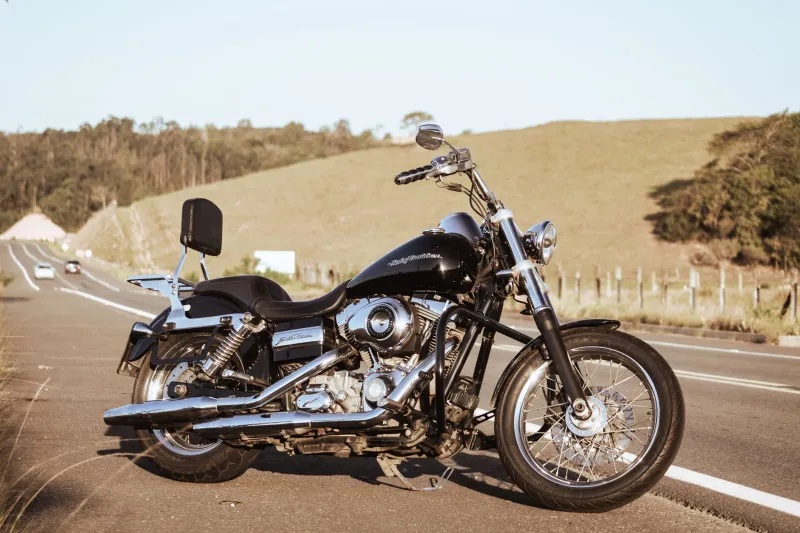
Ask ten riders to name the greatest motorcycle route in America and you'll get ten different answers — and probably a two-hour argument. That's fine. That's actually the point. This country is absurdly, almost unreasonably rich with legendary roads, and the debate over which ones matter most is part of the culture.
But certain routes keep rising to the top. They show up in the stories of riders who've been doing this for decades. They anchor the bucket lists of people who just got their license last spring. They've been immortalized in photographs, in films, in the kind of road-worn conversation that happens at a diner counter somewhere off the interstate at 7 a.m.
Here are five of them — and why a vintage bike isn't just a good choice for these roads. It's the right one.
1. Pacific Coast Highway, California — Where the Continent Runs Out of Land
Route 1 along the California coast doesn't need an introduction, but it deserves one anyway. Stretching roughly 650 miles from the Oregon border down toward Los Angeles, the PCH is arguably the most visually dramatic road in North America. The stretch between San Francisco and Morro Bay — particularly through Big Sur — is something close to sensory overload: sheer cliffs dropping to cold Pacific water, redwood groves, sea fog rolling in at dusk, and almost no cell service.
Riders have been making this pilgrimage since the highway was completed in the 1930s. The road has a history that matches its scenery — it was a Depression-era engineering feat that took 18 years and a staggering amount of human labor to carve into the California coastline.
Why ride it vintage: A classic bike slows you down in the best possible way. You're not chasing a destination; you're in the experience. A '69 BMW R60 or a '74 Moto Guzzi Eldorado rolling through Big Sur fits the landscape in a way that a modern sportbike simply doesn't. Stop at Nepenthe in Big Sur for lunch. Pull off at every turnout. This road rewards the unhurried.
Must-stop: Bixby Creek Bridge. Get off the bike, walk to the rail, and spend ten minutes looking at where the land meets the Pacific. It's one of those places.
2. Blue Ridge Parkway, Virginia & North Carolina — America's Oldest Long-Distance Scenic Road
Run the numbers on the Blue Ridge Parkway and they're almost too good to be true: 469 miles of continuous scenic roadway with no commercial vehicles, no billboards, no traffic lights, and a posted speed limit of 45 mph. The National Park Service manages the road, and it's been doing so since the Parkway's construction began in 1935 as a New Deal project connecting Shenandoah National Park to the Great Smoky Mountains.
The result is a road that feels genuinely removed from modern America — and that's entirely the point. Elevation shifts dramatically as the Parkway traces the spine of the Appalachians, meaning temperatures can drop 20 degrees in a few miles and weather changes fast. Come prepared.
Fall is the legendary season here. From mid-October into early November, the hardwood forest ignites in a color show that draws riders from across the country. But spring — when the mountain laurel and rhododendron are blooming — is a legitimate rival.
Why ride it vintage: The Parkway was designed to be experienced slowly and deliberately. Its rhythm suits a classic bike perfectly. A British twin from the '60s — a Triumph Trophy, a BSA Spitfire — sounds and feels exactly right winding through the Appalachian highlands. There's a continuity to it, a sense that the road and the machine belong to the same era of American outdoor culture.
Must-stop: Mabry Mill at milepost 176.1 in Virginia. It's a restored 19th-century gristmill, and on weekend mornings locals demonstrate traditional Appalachian crafts nearby. Get coffee. Take your time.
3. Highway 89 Through the Grand Staircase, Utah & Arizona — The High Desert in Full Color
If the PCH is America's most dramatic coastal ride and the Blue Ridge is its most refined, Highway 89 through southern Utah and northern Arizona is its most otherworldly. The road runs from Kanab, Utah, south through the Vermilion Cliffs, past the entrance to the Grand Canyon's North Rim, and into the Navajo Nation. The landscape is genuinely alien — red rock formations, thousand-foot sandstone cliffs, and a sky so wide and blue it feels painted on.
The historical context here runs deep. This corridor sits within the ancestral territory of multiple Indigenous nations, and the cultural sites along the route — from the cliff dwellings near Kanab to the sacred lands of the Navajo — deserve respect and genuine engagement, not just a drive-by photograph.
Why ride it vintage: The isolation demands mechanical self-sufficiency that vintage riders already understand. Gas stations are sparse. Cell service is patchy. A rider who knows their machine — knows its sounds, its quirks, its warning signs — is the right person for this road. Carry a toolkit. Know your bike.
Must-stop: The Wire Pass Trailhead near Kanab leads into Buckskin Gulch, one of the longest and deepest slot canyons in the American Southwest. Even a short hike in is worth the boot leather.
4. The Tail of the Dragon, US 129 — North Carolina & Tennessee
Elevensteen miles. Three hundred and eighteen curves. The Tail of the Dragon at Deals Gap is a single-purpose road — it exists to be ridden, and the riding community knows it. Located where North Carolina meets Tennessee at the southern end of the Great Smoky Mountains, US 129 has earned a global reputation as one of the most technically demanding and rewarding stretches of pavement on the continent.
It's been a motorcyclist's destination since at least the 1970s, and the culture around it is thick: the Crossroads of Time country store at the gap, the famous "Tree of Shame" decorated with parts from crashed vehicles, the rider registries, the photographs.
Why ride it vintage: Counterintuitive answer — the Dragon rewards bikes that are predictable and confidence-inspiring, not necessarily fast. A well-sorted vintage machine with good tires and properly adjusted suspension can be deeply satisfying here. You're not chasing lap times. You're feeling every curve. A '71 Ducati 450 Desmo or a '68 Honda CB450 on the Dragon is a genuinely excellent afternoon.
Must-stop: Pull over at the gap itself and spend a few minutes watching other riders come through. The variety of machines, the range of skill levels, and the shared energy of the place is a small portrait of American riding culture.
5. Route 66, Chicago to Los Angeles — The Road That Built the Mythology
No list like this is complete without it. Route 66 is less a road at this point than a concept — a 2,400-mile cultural artifact stretching from Chicago to Santa Monica that has been romanticized in song, literature, television, and film for nearly a century. The original route was commissioned in 1926 and decommissioned in 1985, replaced by the interstate system. What remains are segments, some beautifully preserved, some crumbling, stitched together by dedicated preservationists and the sheer weight of nostalgia.
Riding the full length takes commitment — typically eight to twelve days at a reasonable pace — but the reward is a cross-section of American geography and culture that no other route can match. Oklahoma plains. Texas panhandle. New Mexico high desert. Arizona canyon country. California Mojave. The road hits everything.
Why ride it vintage: Because this road is vintage. The diners, the motor courts, the neon signs, the trading posts — they're all artifacts of mid-century American life. A classic motorcycle rolling down the Mother Road isn't a costume; it's a reunion. A '59 Harley-Davidson Panhead on Route 66 is exactly where it belongs.
Must-stop: The Blue Swallow Motel in Tucumcari, New Mexico. It's been operating since 1939, the neon sign is legendary, and they welcome motorcyclists. Book ahead.
The Road Is the Point
These five routes aren't just great rides — they're arguments for a particular way of moving through the world. Slow enough to see things. Exposed enough to feel them. Connected enough to a mechanical object that you're part of the journey, not just a passenger in it.
That's the Century Ride ethos in its simplest form. The machine matters. The road matters. The miles between here and there are not something to be minimized.
They're the whole thing.