Too Many Bikes, Not Enough Road: The Hidden Cost of a Growing Classic Collection
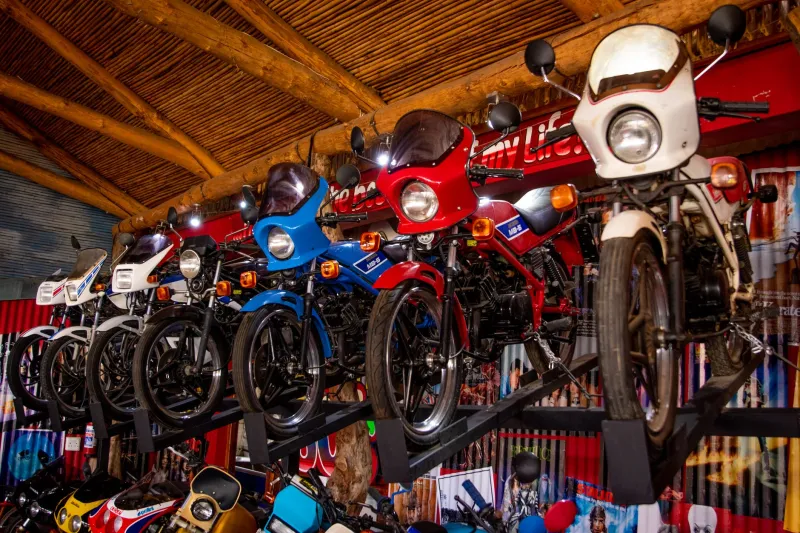
It starts innocently enough. You pick up a 1972 Honda CB350 at an estate sale for $800, get it running over a winter, and feel that particular high that only a classic bike restorer knows. Then a friend tips you off about a '68 Triumph Bonneville sitting in a barn outside Knoxville. Then there's the Harley Sportster basket case on Craigslist that's "too good to pass up." Before long, you're stepping over handlebars just to get to your workbench, and your spouse is giving you a look that could strip chrome.
Welcome to the collector's curse.
It's a phenomenon as old as the hobby itself—the slow, seductive accumulation of machines that each seem essential at the time of purchase. But the gap between acquiring and actually owning classic motorcycles is wider than most enthusiasts want to admit. Storage costs money. Insurance adds up fast. Maintenance backlogs stretch from months into years. And somewhere along the way, the garage stops feeling like a sanctuary and starts feeling like a liability.
The Math Nobody Wants to Do
Let's talk dollars. A single classic motorcycle sitting in a climate-controlled storage unit in the Midwest might cost you $150–$250 a month, depending on your market. That's before you factor in a dedicated collector's insurance policy, which typically runs $200–$500 per bike annually through specialty insurers like Hagerty or Markel. Now multiply that across five, seven, or ten machines—numbers that serious collectors hit faster than they expect—and you're looking at a four-figure monthly overhead just to own bikes you may not have ridden in two years.
Dave Kowalski, a retired machinist from outside Milwaukee, built his collection to eleven bikes over about fifteen years. "At my peak, I was spending close to $2,400 a month between storage and insurance," he says. "I wasn't even counting parts. I had three bikes that hadn't moved under their own power since Obama's first term."
Dave's situation isn't unusual. What is unusual is that he sat down and actually did the math. Most collectors don't—at least not until the credit card statement forces the conversation.
The Maintenance Backlog Problem
Money is only part of the equation. Time is the other currency being spent, and vintage motorcycles are hungry for both.
Every classic bike you add to a collection represents a maintenance commitment. Seals dry out. Carbs gum up. Tires go flat and then develop flat spots. Wiring harnesses deteriorate on their own schedule, completely indifferent to your work schedule. A bike that sits for eighteen months without attention doesn't just need a tune-up—it may need a partial teardown.
Restoration mechanics call it "shelf rot," and it's the silent destroyer of collections everywhere. The bikes you plan to get to eventually are quietly getting worse. The project you meant to start last spring is now a bigger project than it was.
"I had a '74 Kawasaki Z1 that I bought in nearly rideable condition," says Sandra Oakes, a vintage bike enthusiast from Tucson. "By the time I got around to it—three years later—the tank had developed serious rust, the carbs were completely seized, and a mouse had made a home in the airbox. What should've been a $600 refresh turned into a $2,200 restoration."
The hard truth: a neglected classic doesn't hold its value the way a well-maintained one does. Shelf rot is a debt that compounds.
The Psychology of Letting Go
Here's where things get genuinely complicated. Because for most collectors, this isn't purely a financial problem. It's an emotional one.
Every bike in a collection carries a story—the guy you bought it from, the summer you finally got it running, the road trip you took it on once and always meant to repeat. Selling feels less like a transaction and more like a betrayal. You're not just moving metal; you're closing a chapter.
That psychological weight is real, and it's one reason collectors hold on well past the point of practicality. "I knew for two years that I needed to sell at least four bikes," Dave admits. "But every time I'd walk into the garage and look at them, I'd find a reason. This one just needs a little more work. This one's finally getting rare. This one was my dad's."
Therapists who work with collectors—yes, that's a thing—often describe this as a form of identity attachment. The collection becomes an extension of self, and thinning it out feels threatening.
But here's the reframe that helps a lot of people: selling a bike to someone who will actually ride it isn't abandonment. It's graduation. The machine gets to live again, and you get breathing room—financially and physically.
Practical Ways to Right-Size Your Collection
If any of this sounds familiar, here are some approaches that real collectors have used to regain control without losing their minds.
Set a hard number. Decide how many bikes you can genuinely maintain, insure, and ride in a given year. Three? Four? Hold that number. When a new acquisition comes in, something has to go out. This sounds simple because it is, but most collectors never commit to it.
Triage your backlog honestly. Walk through your garage with a notepad and a hard question: if this bike were gone tomorrow, would you miss it or feel relieved? The ones that prompt relief are probably good candidates for new homes.
Explore consignment. You don't have to do the selling yourself. Specialty dealers and auction houses like Mecum or Bring a Trailer handle the logistics. Yes, they take a cut. But they also handle the tire-kickers, the lowballers, and the no-shows—which is worth something.
Document before you sell. Take photos, pull the VIN history, note what work you've done. A well-documented bike commands better money and gives the next owner a running start.
Consider a riding club or co-op arrangement. Some enthusiasts in the same geographic area have started informal arrangements where multiple people share maintenance responsibility and riding time on a small fleet. It's not for everyone, but it's a creative way to stay connected to more machines than you could realistically own solo.
The Garage as a Living Thing
The best collections aren't the biggest ones. They're the ones where every bike earns its floor space—where nothing is there just because you couldn't bring yourself to sell it.
A garage full of running, maintained, occasionally ridden classics is a beautiful thing. A garage full of promises you made to yourself five years ago is something else entirely.
The century ride isn't about how many bikes you've owned. It's about how many miles you've actually put on them. Keep the ones that move you—literally and otherwise. Let the rest move on.