Nuts, Bolts, and Principles: The Great Fastener Debate Dividing Classic Bike Restorers
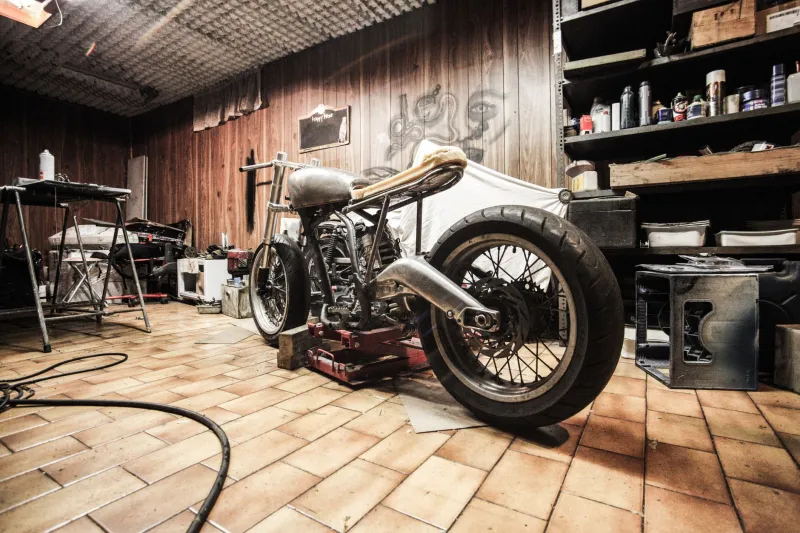
Walk into any serious vintage motorcycle shop in America and you'll find two kinds of people. The first type will spend three hours hunting down a correct Whitworth bolt because anything else is, in their words, a betrayal. The second type will swap in a metric fastener without a second thought, call it Tuesday, and have the bike running by noon. Neither camp is entirely wrong. And that's exactly what makes this argument so interesting.
The metric vs. imperial divide in classic motorcycle restoration isn't just about hardware. It's a philosophical fault line running straight through the vintage riding community — touching everything from electrical systems to carburetor jets, from brake lines to engine internals. How you land on this debate says a lot about why you ride old bikes in the first place.
Where the Argument Starts
British bikes from the '50s through the '70s — your BSAs, Nortons, Triumphs — were built around Whitworth and BSF (British Standard Fine) thread standards. American iron like early Harleys and Indians ran on SAE (Society of Automotive Engineers) imperial specs. Japanese bikes that started flooding the U.S. market in the late '60s brought metric standards with them, and that's when things got complicated.
Fast forward to today, and a restorer working on a '68 BSA Lightning faces a genuine dilemma. Original Whitworth fasteners are harder to source, more expensive when you find them, and require a dedicated set of tools that most modern mechanics don't carry. A metric equivalent fits almost as well, costs a fraction of the price, and can be replaced at any hardware store in the country.
"I've had this argument a hundred times," says Dave Kowalski, who runs a restoration shop out of his garage in Albuquerque and has been wrenching on British bikes since the Reagan administration. "Guys come in and they want everything period-correct, which I respect completely. But then the bike sits in their garage because they can't find a single bolt, and that's not doing the machine any favors either."
The Case for Keeping It Original
For purists, the argument is straightforward: a classic motorcycle is a historical artifact as much as it is a machine, and altering its specifications — even in small ways — chips away at its authenticity. This matters especially to concours competitors, collectors who plan to sell, and riders who see restoration as a form of preservation.
There's also a practical argument hiding inside the purist position. Original hardware, when properly sourced, was engineered to work with original components. Thread engagement, torque specs, material compatibility — these things were calculated together. Swapping in modern metric fasteners on a vintage British engine case, for instance, can sometimes mean dealing with slightly different clamp loads or thread engagement depths that weren't part of the original design.
Mike Ferrara, a longtime member of the Antique Motorcycle Club of America and based out of rural Pennsylvania, puts it plainly: "When I'm done with a restoration, I want someone to look at that bike in twenty years and not be able to tell I touched it. That's the goal. Every shortcut you take is a little lie you're telling about the machine."
The Case for Going Practical
On the other side of the shop floor, there's a growing contingent of restorers who argue that a motorcycle's real purpose is to be ridden — and that obsessing over thread standards at the expense of reliability misses the point entirely.
This camp tends to take a more holistic approach to modernization. It's not just fasteners. They're talking about upgraded rectifiers and solid-state ignition systems replacing points-based electrics. Sealed bearings swapped in for older loose-ball designs. Modern brake lines that actually stop the bike in a reasonable distance. Electronic fuel delivery on bikes that originally ran carburetors.
Each of these changes makes the bike more dependable, safer, and easier to live with on a daily or weekend basis. And proponents argue that if the goal is to actually use the machine — to put miles on it, to take it on the kinds of long rides that Century Ride was built to celebrate — then some level of practical modernization isn't a compromise. It's respect.
"My '72 Norton Commando has about thirty percent modern components at this point," admits Sandra Chow, a Bay Area rider who bought her bike as a basket case and spent two years getting it road-worthy. "The frame is original, the engine cases are original, the bodywork is original. But the wiring is all new, the carbs have been rebuilt with modern jets, and yes, there are metric bolts in places you'd never see them. She runs perfectly. I ride her to work. That feels like honoring the bike to me."
Where Electrical Systems Enter the Picture
If fasteners are the opening act, electrical systems are where the debate really heats up. Lucas Electronics — the British firm responsible for wiring most classic British bikes — has been the subject of so many jokes that "Prince of Darkness" is practically a brand nickname at this point. Vintage British bike electrics are notorious for gremlins, grounds that don't ground, and charging systems that seem allergic to consistency.
Modern replacements — solid-state regulators, LED lighting, electronic ignition — solve most of these problems cleanly. But they also change the character of the machine. A points-based ignition has a rhythm to it, a tactile feedback loop between rider and machine that electronic systems don't replicate. Some riders genuinely love that. Others just want the bike to start.
The compromise position, increasingly popular among experienced restorers, is to modernize the systems that affect reliability while keeping the visible, touchable elements period-correct. New wiring harness behind original-look covers. Electronic ignition hidden inside a stock-appearing distributor housing. It's not pure, but it works.
What This Debate Really Reveals
Strip away the technical specifics and what you're really looking at is a question about identity. Why do you own a classic motorcycle? Is it a rolling museum piece, a time machine, a conversation starter? Or is it a tool for experiencing the road in a way that modern bikes — smooth, powerful, digitally managed — simply can't replicate?
The honest answer, for most riders, is somewhere in the middle. And that's fine. The vintage motorcycle community is big enough for both philosophies. What matters is that these machines keep running, keep turning heads, and keep inspiring the kind of reverence that makes someone spend a weekend hunting down a correct Whitworth bolt in the first place.
Whether you wrench with a set of imperial spanners or a metric socket set, the road doesn't much care. It's waiting either way.