What Your Nose Knows: The Science Behind Why Old Bikes Hit Different
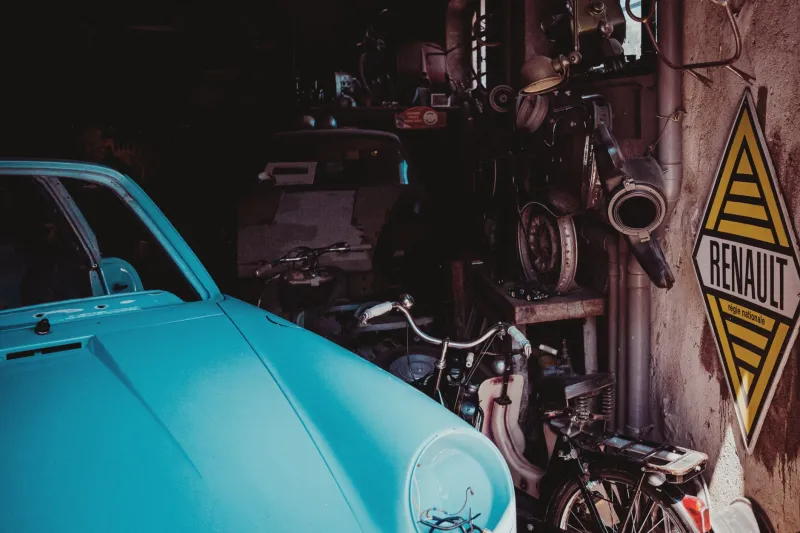
You know the feeling. You crack open a barn door, step into a storage unit, or lean over a freshly uncrated machine at an estate sale — and before you've even laid eyes on the thing properly, your brain is already somewhere else entirely. Maybe it's a summer afternoon from thirty years ago. Maybe it's your grandfather's garage, the one with the pegboard tool wall and the AM radio. Maybe it's a memory you can't quite name but feel in your chest.
That's not sentimentality. That's neuroscience.
Why Smell Is the Most Honest Sense You Have
Of all five senses, smell is the only one with a direct line to the brain's limbic system — the region that governs emotion and long-term memory. Every other sense gets routed through the thalamus first, processed and filtered before it reaches the emotional core. Smell skips that step entirely. It lands in the amygdala and hippocampus like a letter slipped under a door — immediate, unfiltered, personal.
This phenomenon even has a name: the Proust Effect, borrowed from the French novelist Marcel Proust, who famously described being flooded with childhood memories after tasting a madeleine dipped in tea. Psychologists and neurologists have studied it extensively, and the findings are consistent: odor-triggered memories are older, more emotionally charged, and more vivid than memories triggered by any other sensory cue.
For vintage motorcycle enthusiasts, this isn't trivia. It's the whole ballgame.
The Cocktail of Smells That Makes Old Bikes Unforgettable
A vintage motorcycle doesn't smell like one thing. It smells like a dozen things layered on top of each other, each one telling part of the machine's story.
There's the base note of aged petroleum — old fuel residue that's soaked into carburetors, fuel lines, and tank seams over decades. Beneath that, the slightly sweet, slightly acrid smell of oxidizing metal, particularly on chrome and bare steel that's seen weather and humidity over a long life. Then there's the leather: cracked and dry if it's been sitting, or treated and supple if someone's been caring for it. Old leather carries its own layered history — sweat, saddle soap, sunscreen from a hundred long rides.
And then there's the oil. Not fresh synthetic oil, which smells almost clinical by comparison. Old petroleum-based engine oil that's been cooked into gaskets, pooled in case seams, and absorbed into every porous surface nearby. It's a smell that mechanics and riders of a certain generation recognize the moment it hits them.
"That smell is a time machine," says Marcus Delray, a restoration specialist based out of Chattanooga, Tennessee, who has been rebuilding British and American classics for over two decades. "I've had guys come into my shop and completely lose it — not in a bad way — just standing next to a '67 Triumph Bonneville that's been sitting in a shed. They're somewhere else for a second. You can see it on their face."
When the Machine Becomes a Memory Anchor
Psychologists use the term "memory anchor" to describe objects, sounds, or smells that reliably trigger autobiographical recall. For a significant segment of American riders — particularly those who grew up in the 1960s, '70s, and '80s — vintage motorcycles function as some of the most powerful memory anchors in their lives.
Part of this is developmental timing. Memories formed during adolescence and early adulthood are encoded more deeply than those formed later in life, a phenomenon researchers call the "reminiscence bump." If your first encounter with a motorcycle happened when you were sixteen — borrowing a neighbor's Honda, watching your uncle kick-start a Harley Shovelhead in the driveway, or flipping through a dog-eared copy of Cycle magazine — those sensory imprints are etched at a neurological depth that nothing in middle age is likely to match.
Which is why, for many enthusiasts, restoring or simply being near a vintage machine isn't really about the machine at all. It's about recovering something.
"I bought my '71 BSA A65 because I needed a project," admits Dave Kowalski, a retired firefighter from outside Milwaukee who's been working on the bike for three years. "But honestly? My dad had one almost exactly like it when I was a kid. I didn't even realize that's why I bought it until I got it home and started stripping it down. The smell hit me and I just sat down on the garage floor for a minute. I wasn't upset — I was just... back there."
The Role of Restoration in Sensory Preservation
Here's where it gets interesting from a restoration standpoint: the act of working on a vintage bike extends and deepens the sensory experience rather than diminishing it. Every hour spent with your hands on an old machine — cleaning carbs, chasing down wiring gremlins, polishing cases — creates new sensory memories layered over the old ones.
Restorers often talk about "respecting the patina" of a machine, and while that phrase usually refers to aesthetics, there's a sensory argument for it too. A bike that's been stripped of everything old and repainted in fresh lacquer, refitted with modern rubber hoses and new-smell components, loses something. The olfactory history is gone. What's left might be mechanically superior, but it no longer smells like the past.
This is why plenty of serious restorers draw a sharp line between a "survivor" bike and a full restoration. A survivor — a machine that's been ridden but not heavily modified, that still carries its original finishes and materials — is a living document. Every crack in the seat foam, every stain on the air filter housing, every ghost of oil around the primary cover is a sensory record of where that machine has been.
Why This Matters for the Hobby
Understanding the emotional mechanics behind vintage motorcycle enthusiasm helps explain why the hobby is so resilient — and why it continues to attract new riders even as the machines themselves get older and harder to source.
People aren't just buying transportation. They're buying access to a particular kind of feeling. They're chasing a sensory experience that modern motorcycles, for all their engineering brilliance, simply can't replicate. A new bike smells like plastics and modern lubricants and dealership floor cleaner. An old bike smells like time.
And time, as it turns out, is the most valuable thing any of us can get back — even if only for the few seconds it takes for a smell to travel from your nose to the part of your brain that still believes it's 1974, and the whole summer is wide open ahead of you.
That's the real reason we keep pulling tarps off old machines and rolling them back into the light. Not to ride them — though that's part of it. But to stand next to something that remembers what we remember, and let the smell do the rest.