Perfect Is the Enemy of Running: Why Chasing Factory-Correct Restorations Can Ruin Your Classic
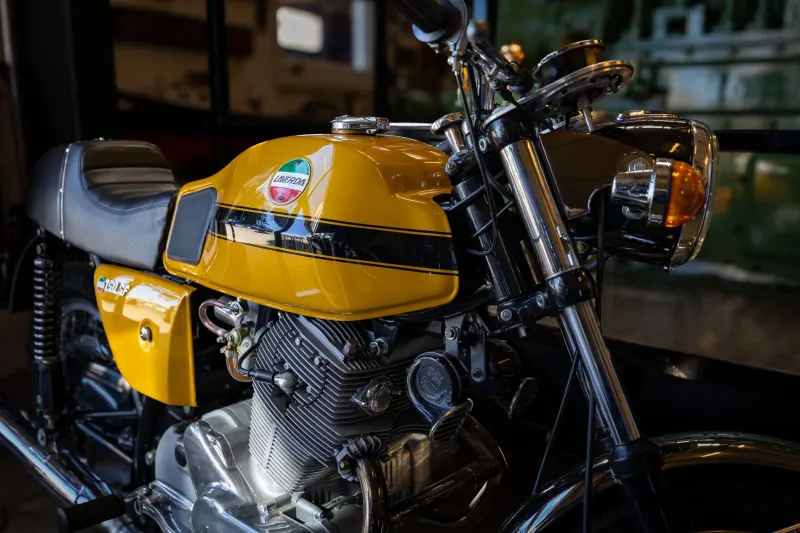
Somewhere in a garage outside Nashville, there's a 1969 Honda CB750 that hasn't moved under its own power in four years. It looks stunning. Every fastener is period-correct. The paint matches the factory code down to the gloss level. The seat foam was sourced from a supplier in Japan who still makes it to original spec. The owner — a guy named Marcus who's been wrenching since before most of his Instagram followers were born — spent somewhere north of $14,000 getting it there.
The bike is worth maybe $9,500 on a good day with the right buyer.
Marcus isn't bitter about it, exactly. But he'll tell you straight: "I stopped riding it the moment I finished it. I'm too scared to put miles on it now."
This is the authenticity trap. And it catches more classic motorcycle restorers than anyone likes to admit.
When the Standard Becomes the Problem
The push for factory-correct restoration didn't come from nowhere. Concours judging, auction culture, and the rise of social media documentation have collectively raised the stakes for what a "proper" restoration looks like. When a numbers-matching BSA or a correct-spec Triumph Bonneville sells for serious money at Barrett-Jackson, it sends a signal — authenticity has cash value.
And it does. For a narrow slice of machines, in a narrow set of circumstances, with the right buyer at the right moment.
The problem is that the standard has crept downward into bikes that will never see that kind of money. Restorers pouring museum-level effort into mid-tier machines they bought because they loved riding them. Weekend warriors spending months sourcing the exact correct clamp for a 1974 Kawasaki Z1 when a functionally identical modern clamp would hold just as well and cost about four dollars.
"There's a difference between a bike that deserves a full concours treatment and one that just deserves to be fixed and enjoyed," says Dave Kellerman, a restoration specialist in Tucson who's been turning wrenches professionally for over two decades. "People lose that distinction. They apply the same standard to everything, and then they wonder why they're burned out and broke."
The Math Nobody Wants to Do
Let's talk numbers, because this is where the authenticity obsession gets genuinely painful.
A respectable rider-grade restoration — mechanically solid, cosmetically presentable, safe and fun to ride — on a classic Japanese or British bike from the 1960s or 1970s might run you $3,000 to $6,000 in parts, supplies, and professional labor, depending on where you start. That bike will likely sell for somewhere in that same range, maybe a little more if you're patient.
A full concours-correct restoration on the same bike? Easily double or triple that figure once you account for NOS parts, period-correct hardware, correct-spec rubber, and the labor hours that go into chasing down every detail. The market value of the finished bike? Often unchanged, or close to it.
The delta between what you spend and what it's worth is what the industry quietly calls "passion spending." Which is fine, if you're honest about it. It's not fine when you convince yourself you're making a sound financial decision while you're doing it.
"I had a customer come in wanting to restore a '72 Triumph Tiger to full factory spec," Kellerman recalls. "I sat down with him and showed him the math. To do it right, we were looking at around $18,000. The bike, done perfectly, might bring $13,000 from a collector. He looked at those numbers for a long time. Then he said, 'What if we just made it really good?' We did it for $7,500. He rides it every weekend. He's happy."
The Riders Who Got Practical
There's a growing contingent of classic enthusiasts who've made peace with what some purists would call compromise — and who ride more miles and enjoy their bikes more because of it.
Tanya Briscoe in Portland, Oregon, owns a 1966 Ducati 250 Monza that she rides to work twice a week. It's not correct. The carb has been updated, the wiring has been modernized with a modern relay setup, and the tires are a contemporary vintage-appropriate compound rather than the original spec rubber. "I know what it's supposed to have," she says. "I also know I want to arrive places alive. The bike looks right. It runs right. That's enough for me."
For Briscoe, the goal was never the trophy. It was the ride. She's logged over 8,000 miles on that Ducati since completing the work. By contrast, a fully correct example she once saw at a show hadn't turned a wheel in three years.
This is the thing the authenticity obsession tends to forget: motorcycles are machines built to move. Freezing them in amber — treating them like artifacts rather than vehicles — fundamentally changes their relationship to the world and to the people who own them.
Where the Line Actually Is
None of this is an argument against quality. A sloppy restoration with mismatched parts and skip-it-and-see attitudes toward mechanical reliability isn't the answer either. The goal isn't to be lazy. It's to be honest.
Ask yourself a few questions before you go down the rabbit hole:
Is this bike actually worth the full concours treatment? A genuine numbers-matching rarity with documented provenance might be. A well-loved mid-production example that's been modified over fifty years probably isn't.
Are you restoring it to ride or to show? Both are valid. But they're different projects with different budgets and different definitions of success. Conflating them is where the trouble starts.
What does the part actually do? If a correct-spec component and a modern equivalent perform identically in real-world conditions, the case for spending four times more on the original gets pretty thin.
Will you actually ride it when it's done? If the answer involves any version of "it'll be too nice to ride," reconsider what you're building and why.
The Bikes That Get Ridden
Here's something the show circuit doesn't tell you: the bikes that get ridden are the ones that get loved. The ones that accumulate stories. The ones that break down in inconvenient places and get fixed with ingenuity and whatever's in the saddlebag. The ones with a scratch from that gravel road in Colorado and a slightly off-spec paint touch-up that you did yourself on a Sunday afternoon.
Those bikes have a life that a trailer queen never will.
Marcus, back in Nashville, is starting to come around. He's been thinking about actually riding the CB750. Maybe putting some miles on it this fall, letting it be what it was always supposed to be. "I spent four years making it perfect," he said recently. "I think I forgot what it was for."
That's the tyranny of authenticity in one sentence. And the cure is pretty simple: unlock the garage, roll it outside, and go for a ride.
The road doesn't care if your fasteners are correct. It just wants to be ridden.