Last Keys in the Lock: The Slow Death of the Independent Vintage Motorcycle Shop
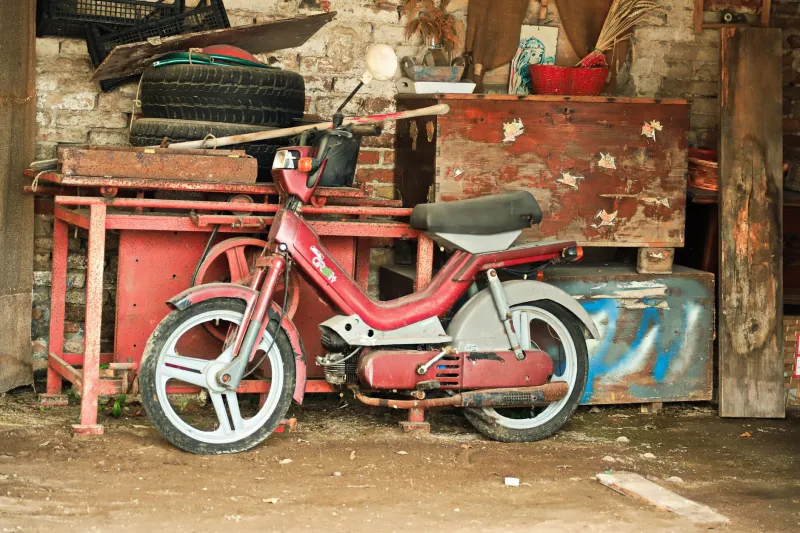
Somewhere in Ohio, a hand-painted sign that's been hanging above a shop door since 1974 is coming down. The owner, a guy who spent fifty years turning wrenches on British twins and Japanese fours, is retiring. Nobody's buying the business. The inventory is going to auction, the tools are getting divided up among friends, and the phone number — the one that regulars memorized the way they memorized their own birthdays — will be disconnected by the end of the month.
This isn't a one-off story. It's happening in garages and storefronts from Vermont to California, and the classic motorcycle community is watching a generation of institutions disappear without much ceremony.
The Numbers Don't Lie, But They Don't Tell the Whole Story Either
The data on independent motorcycle dealerships has been trending in one direction for over a decade. According to industry watchers, the total number of independent powersports retailers in the US has dropped steadily since the mid-2000s, with vintage and classic-focused shops bearing some of the steepest losses. The reasons stack up fast: rising commercial rents, thinning profit margins on parts, the gravitational pull of eBay and online forums, and a buyer demographic that's aging out without a clear replacement cohort coming up behind it.
But ask any longtime shop owner what actually killed their business model, and you'll get a more complicated answer than a spreadsheet can provide.
"It wasn't one thing," says a former proprietor of a classic British bike shop in the Pacific Northwest who closed up after nearly three decades. "It was a hundred small things that all showed up at the same time. Parts availability, insurance costs, the fact that guys started finding stuff online and just figured they didn't need us anymore. Until they did need us, and we weren't there."
What the Internet Gave and What It Took
The rise of online marketplaces reshaped the vintage motorcycle world faster than almost anyone anticipated. For buyers, the upside was obvious: suddenly you could source a carb rebuild kit for a 1968 Honda CB450 without driving three hours to a specialist. Forums and Facebook groups created virtual communities that crossed state lines. Parts that once gathered dust in a shop's back room could now find buyers across the country overnight.
For independent dealers, though, the math got brutal. The retail markup that once kept the lights on evaporated when customers could comparison shop in thirty seconds on their phones. Shops that had built loyal followings on parts availability found themselves undercut by online retailers operating out of warehouses with zero overhead for customer service, community, or expertise.
"I'd spend forty-five minutes on the phone helping some guy diagnose a problem with his vintage Triumph," recalls one Texas shop owner who shuttered his operation in 2021. "Really walking him through it, figuring it out together. And then he'd thank me, hang up, and order the parts from an online warehouse. That happened more than I'd like to admit."
The irony is that those online warehouses often couldn't have answered that forty-five-minute call in the first place. The knowledge that made independent shops valuable wasn't being transferred — it was being extracted and discarded.
The Knowledge Problem Nobody's Talking About
Here's the thing about working on a 1972 Kawasaki H2 or a 1965 BSA A65 that you can't fully Google your way through: context matters. A factory service manual tells you torque specs. A guy who's rebuilt two hundred of the same engine tells you that the factory torque spec was wrong, that the cases crack if you follow it exactly, and that the fix involves a washer trick that some engineer in Coventry figured out in 1967 and passed down through four generations of mechanics.
That kind of knowledge lives in people, not databases. And when those people retire without apprentices, or close their shops without successors, it doesn't migrate to YouTube. It just disappears.
The succession problem is real and largely unaddressed. Many of the most knowledgeable independent shop owners are in their sixties and seventies. The economics of the trade haven't attracted a younger generation of replacements at anywhere near the rate needed. Apprenticeship programs that once funneled young mechanics into the trade have dried up. The pipeline is broken.
"I tried to find someone to take this over," says one Midwest shop owner who spent years working on vintage Japanese bikes before closing. "Somebody younger who I could teach, who could carry it forward. The interest wasn't there — not at the salary the business could support. The economics just don't work for a twenty-five-year-old with student loans."
Community Doesn't Scale
Beyond the technical knowledge, there's something harder to quantify that disappears when a local shop closes: the physical gathering place. Classic motorcycle culture has always been built around in-person community. The shop was where you found out about the swap meet, where you met the guy selling the project bike you'd been looking for, where you spent a Saturday morning drinking bad coffee and arguing about whether SU carburetors are underrated or genuinely terrible.
Online communities are real communities. Nobody's dismissing that. But they're not the same as showing up somewhere, putting your hands on something, and learning alongside people who know more than you do. The shop floor was a classroom that didn't charge tuition.
Riders who've watched their local hub close describe a particular kind of loss — not dramatic, but persistent. "There's no place to just go anymore," one long-time enthusiast in the Southeast put it. "I can get online and find information. But there's no place to just show up and be around people who care about the same stuff I do."
What Survives and What Doesn't
Not every independent classic shop is on the ropes. A handful of operations have found ways to adapt — leaning into restoration services rather than retail sales, building strong regional reputations for specific marques, cultivating event-driven revenue through rallies and riding clubs. Some have pivoted toward consignment sales and brokerage, letting the online marketplace work for them rather than against them.
But these survivors tend to be exceptions built on decades of reputation and specific expertise. They're not easily replicated, and they're not showing up in markets where the old shops have already closed.
What the classic motorcycle world is left with, in too many places, is a vacuum. Riders who need help are increasingly on their own, navigating a fragmented landscape of online resources, inconsistent parts quality, and communities that exist mostly in pixels. The institutional memory that independent shops carried — accumulated over lifetimes of hands-on work — isn't being replaced. It's just gone.
The Road Ahead
There's no clean solution here, and anyone offering one is probably selling something. The economic forces reshaping independent retail aren't specific to motorcycles, and they're not reversing. What the classic riding community can do is recognize what's being lost before it's entirely gone — support the shops that remain, seek out the knowledge holders before they hang up their wrenches for the last time, and understand that the culture they're participating in depends on more than just the machines.
The bikes will outlast the shops. But the people who know them best won't be around forever. And when the last key turns in the last lock, that's not just a business closing. That's a chapter ending.