Miles Don't Lie: How to Decode a Classic Motorcycle's True Story From Its Odometer
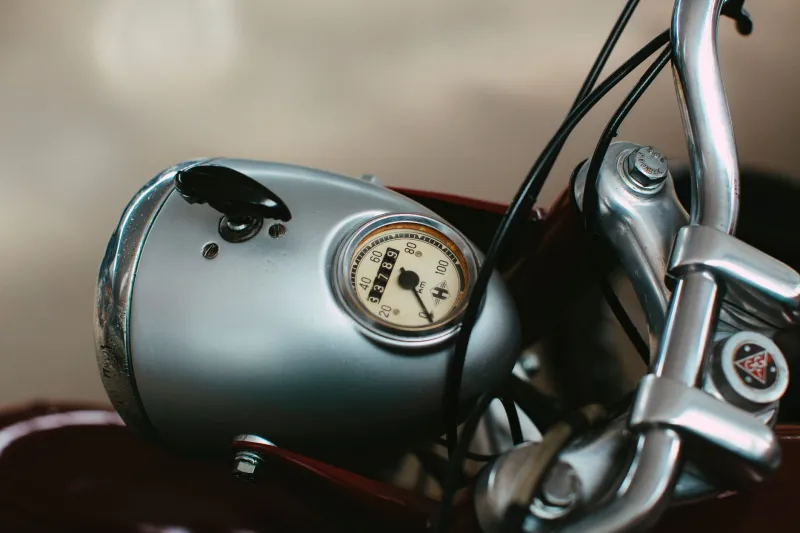
There's a moment every serious vintage bike buyer knows well. You're standing in someone's driveway, the sun cutting low across the tank, and you're staring at the odometer like it owes you an explanation. The number looks right. Maybe even suspiciously right. And that's exactly when you should start asking harder questions.
Mileage is one of the most misunderstood data points in the classic motorcycle world. It's not just a number — it's a biography. And like any biography, it can be edited, embellished, or outright fabricated. Learning to read between the lines is one of the most valuable skills a vintage rider or restorer can develop.
Why Mileage Matters More on a Classic Than a Modern Bike
On a new motorcycle, the odometer is a pretty reliable indicator of wear. Modern machines are engineered to tight tolerances with synthetic lubricants, electronic monitoring, and service intervals designed to keep everything honest. But on a classic — say, a 1972 Triumph Bonneville or a 1968 Honda CB450 — things get a lot murkier.
Old odometers were mechanical. They used a series of gears and drums to roll those numbers over, and they were absolutely not tamper-proof. A set of small picks, a little patience, and a seller with flexible ethics could rewind a five-digit mechanical odometer in under an hour. Before federal odometer fraud laws tightened up in the 1980s and 1990s, rolling back the clock on a used vehicle was practically a cottage industry.
Beyond fraud, there's another wrinkle: many classic odometers only go to five digits. Once a bike hits 99,999 miles, it rolls back to zero. A machine showing 14,000 miles might actually have 114,000 on it. That's not tampering — that's just math. And it's a detail that can completely change what you're willing to pay.
The Paper Trail Is Your Best Friend
Before you even look at the bike, ask about documentation. A genuine low-mileage classic should have something to back it up — dealer service records, oil change receipts, registration renewals, even old insurance cards. These documents build a timeline. If someone claims a bike has 8,000 original miles but can't produce a single piece of paper from the last four decades, that's a red flag worth noting.
Original titles are gold. In many states, title transfers include recorded mileage at the time of sale. If you can trace a bike through two or three owners via title history, you've got a rough mileage map that's hard to fake. The DMV in most states can pull title history for a modest fee, and services like the National Motor Vehicle Title Information System (NMVTIS) exist specifically to help buyers verify this kind of data.
Factory documentation matters too. Some manufacturers — particularly European and Japanese brands popular in the American market — kept production records that survive today. Matching numbers (engine number, frame number, and in some cases, cases and cases) tell you whether the drivetrain has been swapped out, which would make any odometer reading essentially meaningless.
Reading the Machine Itself
Documentation is critical, but the bike itself is always talking. You just have to know what to listen for — and look for.
Grip and footpeg wear are surprisingly reliable mileage indicators. Rubber wears at a predictable rate under normal use. A bike claiming 6,000 miles with completely worn-through grip ends is telling you something. Conversely, grips that look brand new on a bike claiming 40,000 miles might mean they were replaced — totally normal — or might mean someone's been creative with the numbers.
Throttle and brake cables develop a specific kind of wear and fraying that correlates with heavy use. Fresh cables on an otherwise tired-looking machine are worth noting.
Spokes and wheel condition are another tell. High-mileage bikes develop subtle trueness issues, spoke fatigue, and rim wear that's hard to fake in either direction. A spoke that's been replaced recently stands out against aged originals.
Engine internals, if you can get a look, are the most honest witnesses of all. A compression test costs nothing but time and tells you volumes about how hard those cylinders have been working. Low compression on a bike claiming 12,000 miles should raise every eyebrow in the room.
What Different Mileage Ranges Actually Mean
Once you've done your homework and you're reasonably confident in the number, what does it actually tell you about the machine?
Under 10,000 miles on a pre-1980 classic is genuinely rare and genuinely exciting — but it comes with its own concerns. Very low-mileage bikes are often machines that sat for long periods. Sitting is hard on seals, carburetors, fuel systems, and tires. A bike with 8,000 miles that spent twenty years under a tarp in a barn might need more work than a honest 40,000-mile machine that was ridden and serviced regularly.
10,000 to 30,000 miles is often the sweet spot for classic bikes. These machines were actually used — broken in properly, kept running, and in many cases regularly serviced by owners who cared. They're not oddballs preserved in amber, and they're not worn-out survivors. This range often represents the most honest, road-ready examples.
30,000 miles and above doesn't automatically spell trouble. Many vintage bikes were engineered to run well past this point with proper maintenance. What matters is how those miles were accumulated. Highway miles are far kinder than stop-and-go city riding. A bike that spent its life cruising rural highways in the Southwest is a different animal from one that spent fifteen years commuting through Chicago traffic.
A Few Detective Tricks Worth Knowing
Beyond the obvious stuff, there are a handful of tricks experienced buyers use to get a better read on mileage authenticity.
Check the oil filler cap and the area around it. Decades of oil changes leave a specific kind of accumulated grime that's difficult to simulate. A suspiciously clean engine bay on an old bike isn't always good news — it might mean someone pressure-washed away the evidence.
Look at the brake drum or rotor wear patterns. These wear in direct proportion to miles ridden and are almost impossible to fake without replacement.
Ask the seller to start the bike cold. How it fires up, how it idles, and how it responds in the first minute of running tells an experienced ear a lot about internal wear and condition.
And finally — trust your gut. If the story feels too clean, if the numbers are suspiciously round, if the seller gets defensive when you ask basic questions about service history, those instincts exist for a reason.
The Bottom Line
Mileage on a classic motorcycle is a starting point, not a verdict. A high number on an honest, well-maintained machine is far better than a suspiciously low number on something that's been messed with. The goal isn't to find the lowest mileage bike — it's to find the most truthful one.
Do the homework. Follow the paper trail. Let the machine tell its own story. Because out here on Century Ride, we've always believed the best classics are the ones that come with real history — even when that history is a little rough around the edges.