Dead in the Corner: The Cold Truth About Bringing a Non-Running Classic Back to Life
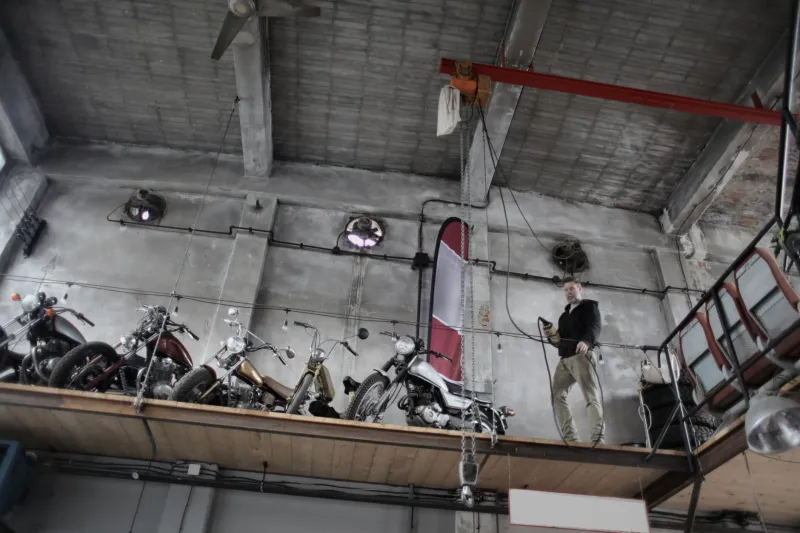
You've walked past it a hundred times. Maybe you bought it with the best intentions, or maybe it came with the house, or maybe a buddy sold it to you for four hundred bucks and a handshake. Whatever the story, there it sits — a completely dead classic motorcycle in the corner of your garage, not running, not rolling, and not getting any cheaper to fix.
The question every restorer eventually faces is a simple one with a brutally complicated answer: is this thing worth saving?
Let's talk about that.
Why We're Drawn to the Hopeless Cases
There's a particular kind of romantic pull that dead bikes have on certain types of people. It isn't rational. You look at a seized engine, a frame eaten by surface rust, a wiring harness that looks like a rat convention was held inside it — and instead of running, you feel something click. A challenge. A story waiting to be told.
Psychologists sometimes call this "effort justification" — the idea that the harder something is to obtain or complete, the more we value it. But for classic bike restorers, it runs deeper than that. There's an almost spiritual dimension to pulling something mechanical back from the edge. You're not just fixing a machine. You're arguing with entropy itself.
That's the emotional side. And it matters. But it can also get you into serious trouble if you let it make decisions your bank account has to live with.
The First Question: Is It Actually Salvageable?
Not every dead bike deserves a second life. That sounds harsh, but it's true, and ignoring it costs people real money every single day.
Here's a rough framework for honest assessment:
Check the frame first, always. A bad frame is a death sentence for most amateur restorations. Cracks, severe corrosion at the welds, or bends that weren't professionally repaired can make a bike genuinely dangerous to ride, regardless of how beautiful everything else looks. If the frame is compromised, you're either looking at a very expensive professional repair or a parts bike scenario.
Look at parts availability before you fall in love. Some bikes have robust aftermarket support decades after production ended. Others are orphans. If you're looking at an obscure mid-70s Italian twin or a limited-run American oddity, spend thirty minutes on the forums before you commit. Finding out that a critical engine component hasn't been manufactured since 1983 and only two vendors in the country still carry used stock — at collector prices — changes the math entirely.
Assess the engine honestly. A seized engine isn't automatically a lost cause. Seized from sitting is often very different from seized from catastrophic failure. Pull the plugs, pour a little penetrating oil in the cylinders, give it time. If it frees up and the bore looks reasonable, you might be in better shape than you thought. But if you're looking at a spun bearing or a cracked case, the calculus shifts dramatically.
Don't forget the electrics. On older bikes, especially anything from the 1960s and early 1970s with original British-style wiring, the electrical system can be a project unto itself. A full rewire on a classic motorcycle isn't a weekend job. Budget time and money accordingly.
The Hidden Costs Nobody Warns You About
The purchase price of a non-running bike is almost never the real number. Experienced restorers know this. First-timers learn it the hard way.
Here's where the surprises tend to hide:
Specialty tools. You will need tools you don't own. A flywheel puller for a specific engine. A valve spring compressor that fits a particular head. A torque wrench calibrated for the smaller fasteners common on older Japanese bikes. These costs add up fast, especially if you're buying quality tools rather than the cheap stuff that strips out at the worst possible moment.
Surface preparation. Getting metal ready for paint or powder coat is labor-intensive and often expensive if you're farming it out. Sand blasting, media blasting, chemical stripping — whatever method you choose, it takes time and money that most project budgets don't account for upfront.
The cascade problem. You fix one thing and find two more. This is almost a law of classic bike restoration. Pull the carb to rebuild it and discover the intake manifold is cracked. Replace the exhaust and realize the mounting tabs on the frame are rotted through. Budget for discovery. Seriously — add twenty to thirty percent on top of whatever estimate you've made, and even then, be ready to be surprised.
Your time. This one's invisible but real. If you're spending evenings and weekends in the garage over six months, that's time with a value — even if you never put a dollar figure on it. It's not a reason not to do the project. It's just worth acknowledging honestly.
The Bikes That Are Worth the Gamble
So which dead classics are actually good candidates for resurrection?
Generally speaking, you want bikes with strong marque communities and solid parts support. Honda CB-series bikes from the late 1960s through the 1970s are perennial favorites for a reason — parts are everywhere, knowledge is everywhere, and a running, restored example has real value when you're done. Same story for early Triumph twins, vintage Harley-Davidson ironheads, and many of the classic Japanese four-cylinder bikes from the UJM era.
Bikes with simpler mechanical designs also tend to reward the effort more reliably. Fewer systems means fewer failure points and a shorter path to a running machine. A single-cylinder thumper from the early 1970s is a very different project than a late-70s inline-four with a complex emissions system bolted onto it.
Condition of the non-mechanical components matters too. A bike with a solid, straight frame, original numbers, and even rough but complete bodywork starts in a much better position than one that's been stripped, modified, or crashed.
What You Actually Get When You Pull It Off
Here's the part that's hardest to explain to someone who hasn't done it.
When you finally kick a bike over — one that was completely dead six months ago, one that everyone told you to scrap — and it fires up and settles into an idle, something happens to you. It's not pride exactly, though there's plenty of that. It's more like a feeling of having participated in something that mattered. You brought something back. You made a decision to try when walking away would have been easier, and you followed through.
That first ride on a bike you resurrected yourself is genuinely different from any other ride. Every mile is personal. Every sound the engine makes is something you understand intimately, because you put it back together. The road feels different when you know the machine under you that well.
That's what keeps restorers coming back to the bench. Not the finished bike sitting in a show — though that's great too. It's the process. The problem-solving. The late nights and the small victories and the hard lessons. The relationship you build with a machine that asked everything of you.
The Honest Answer
Is the dead bike in your corner worth the gamble?
Maybe. Probably not financially, at least not if you run the numbers cold. But classic motorcycle restoration was never really about the numbers. It's about the kind of person you want to be and the kind of relationship you want to have with the machines you ride.
Do your homework. Assess honestly. Budget realistically. And if you decide to go for it — go all the way. Half-restored bikes are the saddest things in any garage.
The corner has been waiting long enough.