One Good Kick: The Riders Who Refuse to Let the Electric Starter Win
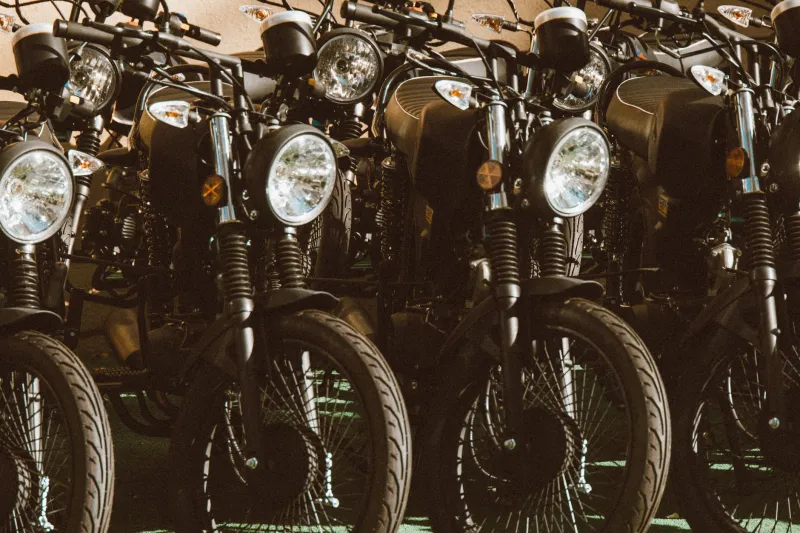
There's a particular kind of morning that only kickstart riders know. It's cold, maybe forty degrees, the garage smells like oil and old rubber, and you're standing next to a machine that has absolutely no obligation to cooperate with you. You tickle the carb, set the choke, say a quiet prayer to whatever mechanical gods you subscribe to, and then you commit. One full, deliberate stroke downward. And either the engine catches — that glorious, clattering bark of an old motor coming to life — or you do it again.
Nobody made you choose this. Electric starters exist. They work great. And yet, here you are.
What the Button Took Away
Modern motorcycles are genuinely impressive machines. They start in freezing temperatures, manage their own fuel mixture, and get you down the road with minimal fuss. That's not a criticism — it's engineering. But somewhere in all that convenience, something subtle disappeared.
Ask a kickstart devotee what that something is, and you'll get different answers. Some talk about ritual. Others talk about respect. A few will just shrug and say they like knowing exactly what's happening when their bike starts, that there's no black box between their leg and the combustion event.
Dave Kowalski, a machinist out of Albuquerque who's been wrenching on British bikes since the late 1970s, puts it plainly: "When I kick my Triumph over, I know that engine. I know how many kicks it takes cold, how it changes when the weather drops, when it needs a little more choke. You lose all of that with a button. The bike stops talking to you."
That communication — the feedback loop between rider and machine — is exactly what the kickstart crowd is protecting.
Ritual as Information
There's a practical argument buried inside what sounds like romanticism. Kicking over an engine tells you things. The resistance through the kick lever gives you a rough compression reading. A bike that kicks through too easily might be losing compression on one cylinder. A bike that kicks back hard and sudden might have timing issues. Before you've even left the driveway, you've done a basic diagnostic — with your leg.
Mechanics who specialize in vintage iron talk about this constantly. Starting a bike by hand forces you to understand it. You learn its moods. You develop a feel for when something's slightly off, even if you can't immediately name what it is. That intuitive knowledge is hard to build on a machine that just starts when you press a button and runs until it doesn't.
For riders who are also their own mechanics — which describes most serious vintage enthusiasts — that knowledge isn't just satisfying. It's useful.
The Commitment Factor
There's also something worth saying about what the kickstart demands of you before you even go anywhere.
Riding a vintage machine isn't passive. It never has been. These bikes require attention, preparation, and a willingness to engage with the mechanical reality in front of you. The kickstart is almost a gatekeeper for that mindset. If you're not willing to spend sixty seconds actually starting your motorcycle, the road ahead is going to test your patience in ways you haven't imagined yet.
In that sense, the kick lever functions as a filter. It sorts the people who want to ride from the people who want to own. That's not a value judgment — plenty of people buy vintage bikes as investments or display pieces, and that's fine. But for the riders who actually put miles on old iron, the starting ritual is part of the experience, not an obstacle to it.
Rachel Thorn, who rides a 1969 BSA Lightning out of Nashville and documents her restoration work online, describes it as setting an intention. "When I go through the process of starting her up, I'm already thinking about the ride differently. I'm present. I'm paying attention. I'm not just commuting — I'm riding."
The Learning Curve Nobody Warns You About
New riders who buy their first kickstart bike without experience often discover, sometimes painfully, that technique matters enormously. You can't muscle your way through a kick. You have to find top dead center, position yourself correctly, and deliver the stroke with your body weight behind it — not just your leg. Get it wrong and the lever kicks back. Get it really wrong and it sends you hopping across the garage on one foot.
But that learning curve is part of the point. Mastering a kickstart isn't difficult exactly, but it requires practice and patience. The first time you nail a cold start on a finicky old British twin in two kicks, it feels like an accomplishment — because it is one. You learned something. You got better at something. That's increasingly rare in a world designed to eliminate friction.
Old-timers who've been kicking bikes over for decades remember learning from other riders, standing in driveways watching someone demonstrate the correct motion, the right stance. It was passed down like a skill worth keeping, because it was.
What It Says About Why We Ride
At a deeper level, the kickstart debate isn't really about starting motorcycles. It's about why people ride vintage bikes at all.
For a certain kind of rider, the appeal of classic machines is inseparable from their demands. These bikes require something of you. They ask you to know them, to maintain them, to adapt to their quirks and limitations. The kickstart is just the most visible expression of that relationship — the moment where the machine literally asks you to bring something physical and deliberate to the table before it'll go anywhere.
In an era when most technology is designed to disappear into the background, these riders are choosing technology that stays stubbornly in the foreground. Technology that pushes back. Technology that has opinions about the weather and the altitude and how long it's been sitting.
There's a reason the kickstart has become something of a symbol in vintage riding culture. It stands for a whole set of values: mechanical engagement, self-sufficiency, the belief that the experience of riding matters more than the efficiency of getting somewhere.
Still Swinging
Nobody's pretending that kickstart bikes are more practical. They're not. They're more demanding, more particular, and occasionally more humbling than anything with a starter button.
But the riders who choose them aren't optimizing for convenience. They're optimizing for connection — to the machine, to the road, to a version of motorcycling that asks something of them every single time they ride.
So the next time you see someone in a parking lot going through the deliberate, focused process of kicking over an old bike, don't feel sorry for them. They know exactly what they're doing. And they wouldn't trade that moment for anything.