Old School Wins: The Real Reasons Carburetors Still Belong on the Road
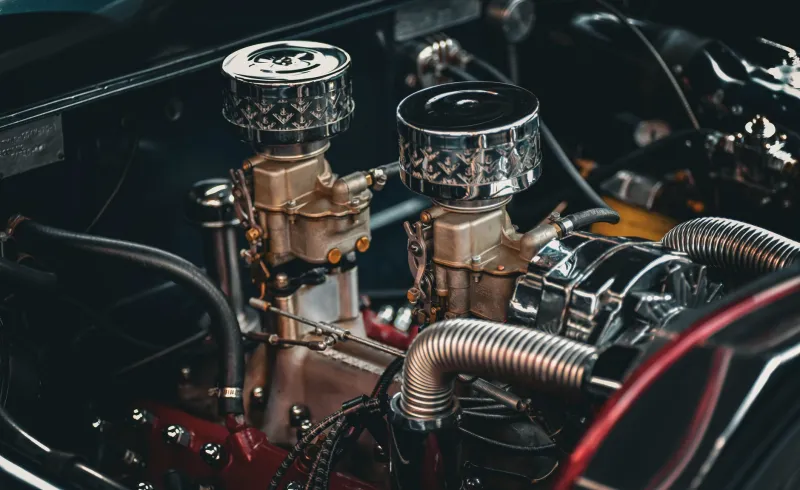
Ask any fuel injection engineer and they'll hand you a stack of data proving that modern EFI systems are objectively superior. Better fuel economy. Cleaner emissions. Tighter tolerances. Smoother power delivery across the rev range. On paper, it's a massacre — carburetion doesn't stand a chance.
Then the temperature drops to fifteen degrees outside of Missoula, Montana, and your throttle position sensor throws a code nobody in a two-hundred-mile radius knows how to clear. Suddenly that stack of data feels pretty thin.
This isn't an argument against progress. It's an argument for context. And in the context of real-world riding — the kind that happens on back roads, in mountain passes, and in conditions that don't care about your warranty — carburetors still earn their keep in ways that fuel injection simply can't match.
The Altitude Problem Nobody Talks About
Spend any time riding through the Rockies, the Sierra Nevada, or even the higher stretches of the Appalachians and you'll understand immediately why altitude matters. Air gets thin. Fuel mixtures that worked perfectly at sea level in Phoenix run rich and sluggish at ten thousand feet outside of Leadville, Colorado.
With a carburetor, fixing that problem takes about four minutes and a screwdriver. You lean out the mixture, maybe swap to a smaller main jet if you're staying up high for a few days, and you're back to pulling clean power through the mountains. The bike responds. You respond. There's a conversation happening between you and the machine.
Fuel injection handles altitude automatically, which sounds great until the system's programming doesn't quite match the specific conditions you're riding in. Some EFI systems adapt well. Others hunt, hesitate, or deliver power in ways that feel disconnected from what you're actually asking for. And when they struggle, there's no quick roadside fix. You're at the mercy of software you can't see and sensors you can't touch.
A carburetor is mechanical. You can see every part of it, understand exactly what each component does, and make adjustments with tools that fit in a jacket pocket. That transparency isn't just convenient — it's empowering.
Fixing It With What You've Got
Here's a scenario every long-distance rider has either lived through or heard about over a campfire: You're three hundred miles from the nearest dealership, it's getting dark, and your bike isn't running right. What you have is a small toolkit, a headlamp, and whatever's in your saddlebag.
With a carburetor, that situation is manageable. A clogged pilot jet? You can clean it with a strand of wire and some compressed air from a can. Float stuck? You can tap it free, check the needle valve, and be back on the road before the stars come out. The parts are simple, the system is logical, and the fixes are within reach of anyone willing to learn.
With modern fuel injection, you're often staring at a sealed unit that requires diagnostic software to interrogate. Sensors fail in ways that produce no visible symptoms. Injectors clog in ways that can't be addressed without proper equipment. Even experienced mechanics sometimes need a laptop plugged into the bike before they can tell you what's actually wrong. That's fine in a shop. On a lonely stretch of highway in West Texas, it's a different story entirely.
Classic bike riders have always operated with a self-reliance mindset. The carburetor fits that mindset perfectly. It rewards knowledge, responds to hands-on attention, and rarely leaves you completely stranded if you understand how it works.
Temperature Extremes and the Limits of Electronics
Cold weather is where carburetors get the most grief. Chokes, enrichment circuits, and finicky cold-start behavior are the stuff of legend — and not always the good kind. Anyone who's kicked over a British twin on a January morning in Chicago knows the ritual well.
But here's what doesn't get enough credit: once a carbureted bike is warmed up and dialed in, it runs with a consistency that electronics sometimes struggle to match at the far ends of the thermometer. Extreme heat can cause vapor lock and fuel delivery issues in both systems, but a carburetor's mechanical simplicity means there are fewer components that can fail catastrophically when things get hot.
Modern EFI systems are also vulnerable to electrical gremlins in ways that carbureted bikes simply aren't. Connectors corrode. Sensors drift out of spec. Wiring harnesses on older EFI bikes — say, anything from the late '80s or early '90s trying to bridge the gap between analog and digital — can become a nightmare of intermittent faults that are nearly impossible to chase down without factory diagnostic tools.
A carburetor doesn't care about any of that. It has no opinion about the humidity, no sensitivity to a loose ground wire, no firmware version to worry about. It mixes air and fuel. That's the whole job.
The Feedback Loop That EFI Erased
There's something else worth talking about that doesn't show up in dyno charts or efficiency comparisons. Riding a carbureted bike teaches you things about engines that fuel injection quietly handles for you — and in doing so, keeps hidden.
When you crack the throttle on a carbureted machine and feel it stumble slightly off idle, you learn something. You learn about accelerator pump circuits, about transition from pilot to main jet, about the relationship between throttle position and airflow. You develop an instinct for what the engine wants. You start to hear and feel things that tell you when something is drifting out of tune before it becomes a real problem.
Fuel injection smooths all of that out. The bike just runs. Which is wonderful, until it doesn't — and then you have no accumulated feel for what changed, no baseline sensation to compare against, no intuition built up from years of small adjustments and honest mechanical feedback.
A lot of experienced riders describe carbureted bikes as more present. More alive under your hands. That's not romanticism talking. It's the natural result of a system that communicates directly with the rider rather than managing everything behind a curtain of sensors and algorithms.
So Where Does That Leave Us?
Nobody's suggesting you throw fuel injection out entirely. On a modern sport bike doing canyon carving at high speed, EFI is genuinely the better tool. For commuting, for reliability across a wide range of conditions without any rider input, for emissions compliance — fuel injection wins those arguments cleanly.
But for the kind of riding that Century Ride is built around — long hauls on classic iron, roads that don't always appear on maps, journeys where self-sufficiency matters as much as speed — the carburetor holds its own. It's field-repairable, altitude-adjustable, mechanically transparent, and honest in a way that teaches you to be a better rider.
Some technologies age out. The carburetor just keeps finding reasons to stick around.
And out on the open road, three hundred miles from the nearest parts store, that's worth a whole lot more than a spec sheet.