Lost in Translation: Why Classic Bikes Speak a Language Modern Riders Have Forgotten
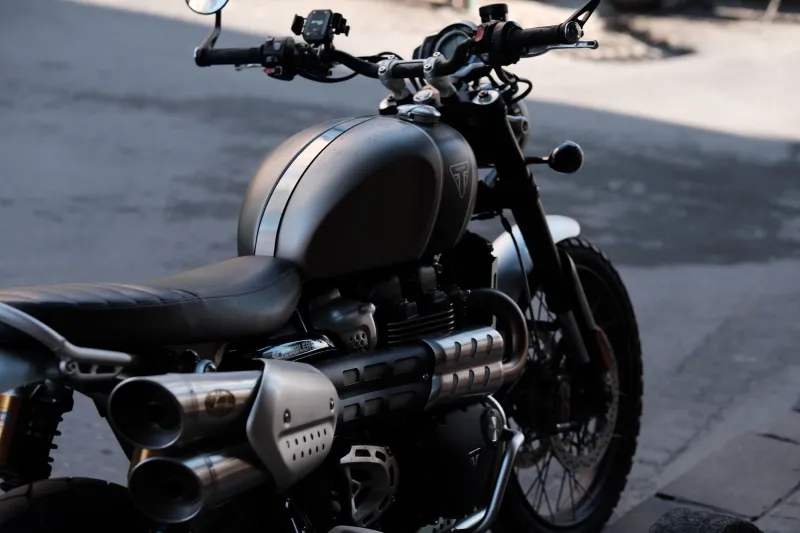
There's a moment that catches nearly every modern rider off guard. You've done your homework, found a clean vintage machine, maybe a '72 Triumph Bonneville or an early CB750, swung a leg over, and twisted the throttle for the first time. And then — nothing feels right. Not broken, not dangerous, just... foreign. Like someone handed you a rotary phone and expected you to feel comfortable.
You know how to ride. You've got thousands of miles on modern bikes. So why does this thing feel like it's actively fighting you?
The short answer is that it isn't fighting you. It's talking to you. And somewhere along the way, you forgot how to listen.
The Comfort Trap of Modern Motorcycles
Let's be honest about what the last two or three decades of motorcycle engineering have done to riders. Traction control intervenes before you even register wheelspin. ABS modulates brake pressure faster than your nerve endings can process. Ride-by-wire throttle bodies smooth out your ham-fisted inputs before they ever reach the engine. Suspension systems with electronic damping adjustment compensate for your mistakes in real time.
None of that is a criticism. Those systems save lives, and they make motorcycles genuinely more accessible. But there's a cost buried in all that convenience — your mechanical intuition quietly goes soft.
When a modern bike's electronics are doing 30 percent of the riding for you, your brain stops building the neural pathways that read raw mechanical feedback. You're not interpreting the road surface through the handlebars anymore. You're getting a curated, filtered version of it. Over years, that filtered experience becomes your baseline. It becomes what riding feels like.
Then you sit on something built in 1968, and the filter is gone.
What the Brake Lever Is Actually Saying
Start with the brakes, because that's usually where modern riders first feel genuinely lost on a vintage machine.
On a contemporary sportbike or adventure tourer, the front brake lever has been engineered to feel consistent and progressive regardless of how ham-fisted you are with it. Radial master cylinders, braided lines, ABS — the system is designed to be forgiving of imprecision. You grab, it stops. The relationship is almost transactional.
On a vintage drum brake setup, or even early single-disc systems without ABS, the lever tells you a story with every squeeze. Fade feels different from proper modulation. A drum that's slightly out of adjustment communicates through the lever before it ever becomes a safety issue. You feel the difference between a cold drum and a warm one. You learn, almost instinctively, to squeeze earlier, to build pressure gradually, to anticipate.
Modern riders often over-brake or under-brake on vintage iron for the first several rides — not because they're bad riders, but because they've never had to consciously develop that sensitivity. The machine demands it, and at first, the demand feels unreasonable.
It isn't. It's just honest.
Throttle Response as a Conversation
Here's something worth sitting with: on a carbureted vintage bike, the throttle isn't a switch. It's a dial, and the engine's response to that dial changes with temperature, altitude, humidity, and how recently you serviced the carb.
Ride-by-wire systems on modern motorcycles are programmed to deliver consistent, predictable power regardless of minor variations in those conditions. The throttle map is calibrated. The fueling is optimized. What you feel in your right wrist is a heavily processed signal.
On a vintage machine with a set of Amal or Mikuni carbs, the throttle is a direct mechanical link to a fuel-and-air mixing device that has opinions. Open it too fast from idle when the engine is cold, and it stumbles. Roll it on too aggressively mid-corner, and the rear steps out before traction control — which doesn't exist — can do anything about it.
That directness is terrifying for about the first fifty miles. After that, it starts to feel like a conversation. You learn the bike's preferences. You develop a sensitivity in your wrist that modern riding never required. You start to feel the difference between a healthy slide and a developing problem, because the throttle is telling you in real time.
That's not a primitive experience. That's a sophisticated one. It just requires you to be the sophisticated component in the system.
What Suspension Was Always Trying to Tell You
Vintage suspension — twin rear shocks, non-adjustable forks, rubber bushings doing their best — is often dismissed as crude. And compared to modern fully adjustable setups with remote reservoirs and compression/rebound damping, it is less capable. But capability and communication aren't the same thing.
Older suspension setups transmit road texture directly. You feel expansion joints. You feel gravel. You feel the difference between asphalt that's been freshly laid and a surface that's been baking under a Texas summer for a decade. That information, unfiltered, reaches your hands and your backside simultaneously, and your body builds a real-time map of the surface you're riding on.
Modern suspension, particularly on higher-end bikes, is so good at absorbing and isolating that you can genuinely lose situational awareness about road conditions. You're comfortable, which is great, until the surface changes dramatically and the feedback arrives late.
Classic bike riders develop what experienced dirt riders call "ground feel" — an almost unconscious awareness of surface conditions communicated through the chassis. It's a skill. And it's one that atrophies quickly when you're riding something designed to insulate you from the ground.
Learning to Ride All Over Again
None of this is meant to scare off modern riders from vintage iron. Quite the opposite. The process of recalibrating to a classic bike — the first few hundred miles of feeling clumsy and over-thinking inputs that used to be automatic — is one of the most genuinely educational experiences motorcycling has to offer.
It strips away the learned shortcuts and forces you to rebuild your riding from first principles. You start paying attention to sounds again. Engine note, exhaust tone, the particular complaint a vintage primary chain makes when it's slightly loose. You start paying attention to feel — not just the dramatic stuff, but the subtle shifts in chassis behavior that precede problems.
You become, in the best possible sense, a more attentive rider.
Veteran vintage enthusiasts will tell you there's a specific moment, usually somewhere around the third or fourth long ride on a classic machine, where the anxiety lifts and the conversation starts to flow naturally. The bike stops feeling like a liability and starts feeling like a partner. You stop fighting the feedback and start using it.
That moment is worth every awkward mile that precedes it.
The Thing Electronics Can't Give You
Modern motorcycles are extraordinary machines. The engineering involved in a current-generation superbike or touring rig is genuinely astonishing. There's no nostalgia-driven argument that old is categorically better.
But there is something that electronics cannot manufacture: the experience of being in unmediated mechanical dialogue with a machine. Of developing skill through feedback rather than having feedback filtered away. Of knowing, through your hands and seat and gut, what a motorcycle is actually doing beneath you.
Classic bikes don't offer that as a design philosophy. They offer it because they had no other option. But the result — a rider who has genuinely learned to read a machine — is something that no amount of ride mode selection can replicate.
The old bikes aren't harder to ride because they're primitive. They're harder to ride because they're honest. And honesty, it turns out, is one of the best teachers motorcycling has ever had.