No Computers Allowed: What Riding a Pre-Electronic Motorcycle Teaches You About Yourself
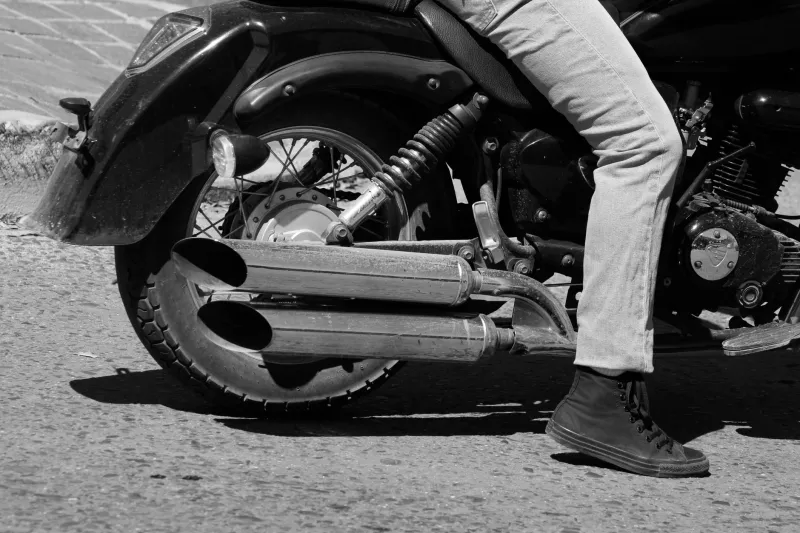
There's a moment, maybe thirty seconds into your first ride on a pre-electronic motorcycle, when something clicks. Not literally — though there's plenty of that too. It's more of a mental shift. The machine underneath you isn't managing anything. It isn't predicting anything. It's just running, and every single thing that happens next is entirely between you and it.
That's either terrifying or intoxicating, depending on your disposition. For a lot of us, it turns out to be both.
The Machine Doesn't Lie
Modern motorcycles are extraordinary pieces of engineering. Nobody serious is arguing otherwise. A current-generation sportbike can out-corner, out-brake, and out-accelerate virtually anything that existed thirty years ago, and it'll do it while quietly catching your mistakes before they become consequences. Lean angle sensors, cornering ABS, throttle-by-wire with multiple maps — the bike is constantly translating your inputs into something safer and more precise than what you actually asked for.
Which is great. Until you realize you've been having a conversation with a translator for years and you've forgotten what the other person actually sounds like.
A carburetor-fed, cable-throttle, drum-or-early-disc-brake motorcycle from the 1960s, 70s, or early 80s doesn't translate anything. Pull the throttle and the slide lifts. The engine gets more air and fuel in direct, mechanical proportion to your wrist. Squeeze the brake lever and you're pulling a cable or pushing fluid with your own hand strength, feeling every bit of the friction between pad and rotor. Hit a bump mid-corner and the handlebar moves. You feel it. You respond. The loop between action and consequence is about as short as physics allows.
That's not primitive. That's honest. And honesty, it turns out, is something a lot of riders are quietly starving for.
What Your Hands Actually Learn
There's a concept old-school riders talk about called mechanical sympathy — the idea that you develop a feel for a machine so intimate that you almost sense problems before they become problems. A slight change in the way the engine pulls. A vibration through the bars that wasn't there last week. A brake lever that's traveling a hair farther than it should.
Modern bikes don't teach you that. They can't, really. Too much is filtered, averaged, and corrected before it reaches your senses. You can ride ten thousand miles on a contemporary machine and still not know what it sounds like when a carburetor needle is set one position too lean, because you've never had a carburetor to listen to.
On a vintage bike, you learn to listen whether you want to or not. The machine insists on it. A 1972 Honda CB750 with a slightly dirty pilot jet will tell you, clearly and repeatedly, that something's off at low throttle openings. A 1969 Triumph Bonneville running rich will fog your visor and smell like unburned fuel for the first five minutes of every cold start. These aren't flaws you tolerate — they're a language you learn. And once you learn it, you start hearing things in every machine you ride.
The Road Feels Bigger
Here's something nobody warns you about before your first long ride on a pre-electronic bike: the road gets bigger.
Not physically. But when you're not insulated by a ride-by-wire throttle map and a six-axis IMU, every mile of pavement carries more information. A change in road surface texture comes through the handlebars as a change in feel, not just a change in sound. A slight headwind registers as resistance through a cable throttle in a way that a fly-by-wire system smooths right out. You read the road differently because you have to, and because you have to, you actually do.
Ride US-89 through the Utah canyon country on a vintage bike and you're not just passing through scenery — you're in a physical negotiation with every curve, every elevation change, every patch of sand blown across the tarmac. The Ozark Highlands Route through Arkansas, all switchbacks and elevation changes and variable pavement, becomes a full-body problem to solve rather than a setting on your traction control map.
Some people find that exhausting. Fair enough. But a lot of riders find that it's the first time in years they've actually been riding, rather than being transported.
The Argument Against Nostalgia
Let's be straight about something: this isn't a nostalgia play. The argument for pre-electronic motorcycles isn't that the old days were better. They weren't, not across the board. Old bikes break more often. They require more maintenance knowledge and more frequent attention. They stop less effectively, handle less predictably in emergencies, and offer zero help if you overcook a corner.
The argument is simpler than that. It's that a certain kind of riding experience — one defined by directness, transparency, and genuine mechanical feedback — is disappearing from new production motorcycles, and for riders who value that experience, vintage bikes are increasingly the only place to find it.
There's a reason the used market for pre-1985 motorcycles has stayed remarkably strong even as new bikes get faster, safer, and more capable. Riders who've spent time on the old stuff keep going back. Not because they're confused about which one is more capable. Because capability isn't always the point.
What You Bring to the Equation
Maybe the deepest thing a pre-electronic motorcycle does is change the question. On a modern bike, the question is often how fast, how far, how smooth. The machine is optimized to maximize those numbers, and your job is mostly to point it in the right direction and stay out of its way.
On a vintage machine, the question becomes: can you and this bike figure it out together? Can you read what it's telling you and respond well enough to keep things flowing? That's a different kind of engagement entirely. It requires something from you that a traction control map can't supply.
Call it skill. Call it attention. Call it presence. Whatever the word, it's the thing that makes a two-hour ride on a 1975 Kawasaki KZ900 feel like an event rather than a commute.
The century riders who came before us didn't have a choice about riding machines this direct. We do. And more of us are choosing it anyway — not out of stubbornness, not out of ignorance, but because we've ridden the modern stuff and we know exactly what we're trading away.
Some things are worth trading back.