Stuck in the Middle and Loving It: Why 1970s Motorcycles Are the Smartest Way Into Classic Riding
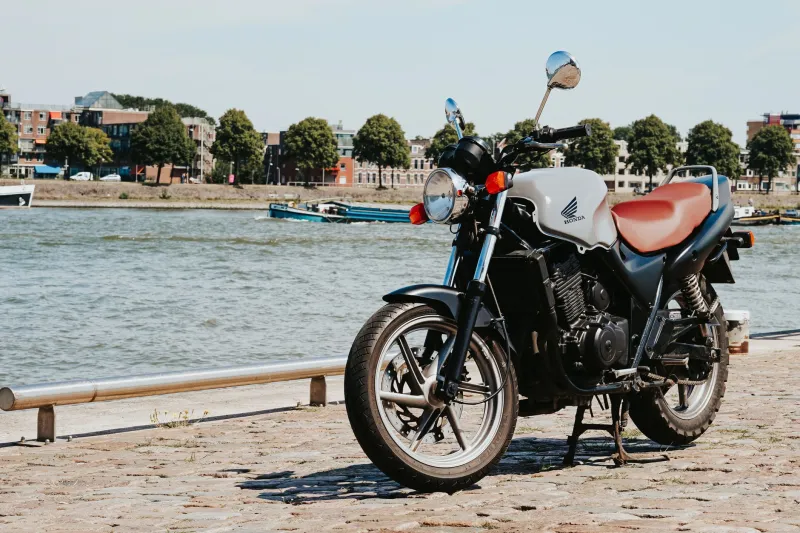
There's a certain kind of snobbery that runs through the classic motorcycle world. Mention the 1970s at a swap meet and you'll get a few raised eyebrows. The hardcore pre-war crowd sees anything with a disc brake as practically modern. The café racer purists are busy arguing about which year of Triumphs actually mattered. And somehow, a decade full of some of the most interesting, accessible, and genuinely fun motorcycles ever built gets left standing in the corner.
That's starting to shift. Quietly, steadily, a new generation of riders is discovering the 1970s — not because it's trendy, but because these bikes make a whole lot of practical sense. They've got character by the bucketload, mechanical layouts simple enough that a patient beginner can actually understand them, and price tags that don't require selling a kidney or raiding a retirement account.
If you've been curious about classic riding but felt intimidated by the commitment — financial, mechanical, emotional — the 1970s might be exactly where you need to start.
Why the 1970s Hit Different
Here's the thing about 1970s bikes that gets overlooked: they represent a genuine turning point in motorcycle engineering. Japanese manufacturers had been in the American market for over a decade by then, and they were hitting their stride. Honda, Kawasaki, Yamaha, and Suzuki were building machines that blended traditional mechanical simplicity with enough refinement to actually be reliable day-to-day riders.
At the same time, the British and European bikes of the era — your Triumphs, BMWs, and Ducatis — were still very much hand-built machines with all the personality and occasional stubbornness that implies. You get real variety across the decade, from the elegantly straightforward to the wonderfully weird.
Compare that to the 1950s and 1960s machines that dominate most classic conversations. Those bikes are beautiful, no question. But parts availability can be a nightmare, and some of them require a level of mechanical fluency that takes years to develop. Ride a poorly sorted vintage British twin and you might spend more time on the side of the road than in the saddle.
The 1970s bikes split the difference. Old enough to have genuine soul. New enough that you can actually find parts, get help from online communities, and ride them without a support van following behind.
The Models Worth Knowing
Talk to anyone who's been down this road and a few names come up again and again.
The Honda CB series is probably the most obvious starting point, and for good reason. The CB350, CB450, CB550, and CB750 all represent different points on the same spectrum — approachable, well-documented, and supported by an enormous parts ecosystem. The CB750, introduced in 1969 and running strong through the 1970s, is often called the bike that changed everything, and riding one still feels like a lesson in why Honda's reputation was so hard-earned. Parts are everywhere. Knowledge is everywhere. You won't be alone figuring it out.
The Kawasaki Z1 and its descendants bring a little more fire to the party. Launched in 1972, the Z1 was Kawasaki's answer to the CB750 and then some — more displacement, more performance, more presence. These bikes have a devoted following and tend to run strong when properly maintained. They're not quite as forgiving as a Honda for a first-timer, but they reward the extra effort with a riding experience that's hard to forget.
Yamaha's XS series, particularly the XS650, has become something of a cult favorite. The twin-cylinder layout feels familiar, the engine is robust, and the café racer and bobber communities have built an entire cottage industry of aftermarket parts around it. If you want a 1970s bike with a clear path toward customization, the XS650 might be your best bet.
BMW's /5 and /6 airheads occupy a slightly different corner of the market. These are bikes for riders who appreciate engineering precision and don't mind paying a little more for it. The horizontally opposed twin layout is distinctive, the build quality is genuinely impressive, and the airhead community is one of the most knowledgeable and generous in all of motorcycling. They're not cheap, but they hold their value and they'll go places other bikes won't.
The Quiet Renaissance Nobody's Talking About
Walk through any significant motorcycle show in the past few years and you'll notice something. Younger riders — people in their late twenties and thirties who weren't alive when these bikes were new — are showing up with 1970s machines and actually riding them. Not trailering them in. Not treating them as display pieces. Riding them.
Some of that is economics. The genuinely rare prewar stuff has priced itself out of reach for a lot of enthusiasts. Even well-sorted 1960s bikes have appreciated significantly. The 1970s still offer legitimate entry points — bikes you can buy for two to five thousand dollars, sort out over a winter, and actually enjoy without treating them like museum pieces.
Some of it is culture. There's a growing resistance to the idea that classic riding has to mean white gloves and velvet ropes. The 1970s bikes carry just enough patina to feel authentic without demanding the kind of reverence that makes riding feel like a performance.
And some of it is just the bikes themselves. Spend a Saturday morning on a well-tuned CB550 and you'll understand pretty quickly why people keep coming back to these machines.
What You're Actually Getting Into
It would be dishonest to pretend 1970s bikes are maintenance-free. They're not. Points ignitions need attention. Carburetors need cleaning. Seals age. Chrome pits. That's part of the deal.
But compared to earlier machines, the learning curve is manageable. Repair manuals are widely available — the Clymer and Haynes guides for most major 1970s models are easy to find and genuinely useful. Online forums like the Vintage Honda Motorcycles group or the XS650 Forum have decades of collective knowledge sitting there waiting for you. You won't be figuring this out alone.
The restoration path is also more forgiving. A 1970s bike with surface rust and a stuck carb is a weekend project, not a years-long odyssey. That accessibility matters when you're still figuring out whether this hobby is really for you.
The Middle Ground Is the Right Ground
The classic motorcycle world loves extremes. The oldest, the rarest, the most original, the most radical custom. The 1970s bikes don't fit neatly into any of those boxes, and that's exactly what makes them interesting.
They're old enough to teach you something. Old enough to demand a little mechanical respect. Old enough to turn heads at a gas station when someone who knows what they're looking at walks over and says, "Man, I used to have one of those."
But they're practical enough to actually ride. Practical enough to learn on. Practical enough to make the classic motorcycle experience feel like something that belongs to you, not something you're borrowing from a museum.
If you've been waiting for the right entry point into this world, stop waiting. The 1970s have been sitting there the whole time, just a little underrated, just a little underpriced, and absolutely ready to go.