Dust, Rust, and Glory: Your Complete Playbook for Turning a Barn-Find Bike Into a Road-Ready Legend
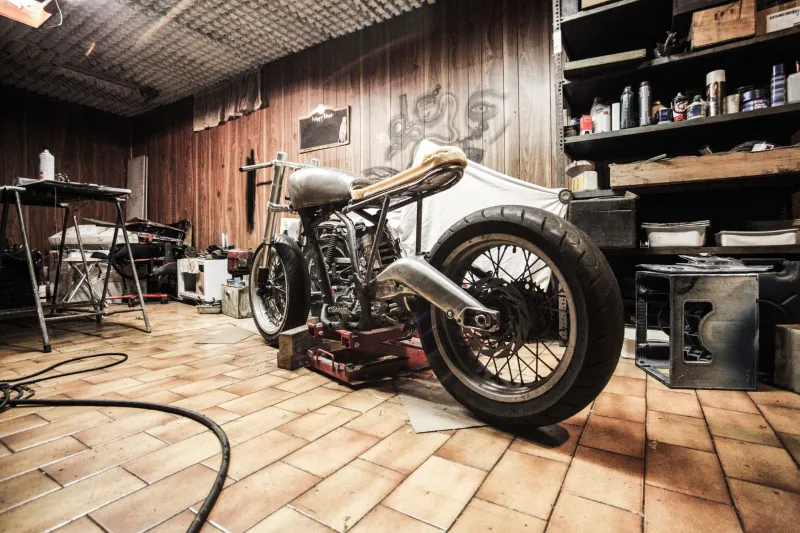
There's a particular kind of magic that happens when you pull back a dusty tarp and find a vintage motorcycle that the world forgot about. Maybe it's a '72 Honda CB550 with a cracked seat and seized carbs. Maybe it's a late-'60s Triumph Bonneville with surface rust and dry-rotted tires. Whatever the machine, one truth holds: these bikes aren't junk. They're projects. And with the right game plan and a realistic budget, you can transform a neglected relic into something that turns heads on the highway.
At Century Ride, we've seen enough successful barn-find builds to know what separates a smart resurrection from a money pit. Here's the full playbook.
Where the Good Bikes Are Hiding
Finding the right project starts well before you ever turn a wrench. The best barn finds aren't on eBay — at least not at good prices. They're out in the world, waiting for someone who knows how to look.
Estate sales and rural auctions are your first hunting ground. When older homeowners pass away or downsize, decades of accumulated machines often get liquidated fast and cheap. Subscribe to estate sale notification services like EstateSales.net and set alerts for your region. Drive out to rural counties — the further from a major metro, the better. People in small towns are less likely to have Googled the current market value of a 1968 BSA Lightning.
Old-school classifieds still work. Craigslist remains a legitimate source if you're patient and check daily. But don't sleep on Facebook Marketplace, local swap meets, and community bulletin boards at feed stores and small-town diners. Word of mouth is powerful — tell people you're looking. You'd be surprised how often someone's neighbor has "an old bike in the barn they've been meaning to deal with."
Dedicated forums and clubs like the Vintage Japanese Motorcycle Club, the Antique Motorcycle Club of America, and model-specific Facebook groups are goldmines. Members often know of bikes sitting in sheds before they ever hit a public listing.
The $500 Assessment: Don't Skip This Step
Before you hand over a dollar, do a proper evaluation. Your goal at this stage isn't to find a perfect bike — it's to find a bike with no deal-breaker problems.
Check the frame and title first. A bent or cracked frame is often a project-ender unless you're a skilled fabricator. And a bike without a title is a bureaucratic nightmare. Verify the VIN matches whatever paperwork exists, and research your state's bonded title or lost-title process before committing.
Next, assess the engine compression with a cheap gauge. Low compression on one cylinder might mean a simple valve adjustment. Low compression across the board could signal a full top-end rebuild — which is doable but adds cost. Spin the engine over by hand if you can; a seized motor isn't automatically a death sentence, but it's a negotiating point.
Look hard at the chrome and sheet metal. Surface rust cleans up. Pitting is trickier. Dented tanks can sometimes be rolled out, but cracked ones need replacement. Budget for at least one cosmetic surprise.
A good rule of thumb: if the bike needs more than 60% of its components replaced to be road-safe, your $5,000 ceiling is going to feel very tight, very fast.
Building Your $5,000 Budget
Here's a realistic breakdown for a typical mid-displacement classic — say, a Japanese UJM from the 1970s or a British twin from the same era:
- Acquisition cost: $800–$1,500 (negotiated price for a non-running project)
- Safety-critical mechanicals (brakes, tires, cables, chain, sprockets): $400–$700
- Engine refresh (carb rebuild kits, gaskets, rings if needed, oil seals): $300–$600
- Electrical system (new battery, points or electronic ignition conversion, bulbs): $150–$300
- Cosmetics (seat foam and cover, paint touch-up or rattle-can respray, chrome polish): $200–$500
- Tools, shop supplies, and miscellaneous fasteners: $200–$400
- Contingency fund: $500–$800
Total: roughly $2,550–$4,800, leaving you a small buffer for the unexpected — and there's always something unexpected.
The key to staying on budget is sourcing smart. eBay Motors, Bike Bandit, and vendor-specific suppliers like Dime City Cycles or SoCal Vintage Moto often have used OEM parts at reasonable prices. For British bikes, SRM Engineering and Hitchcocks Motorcycles ship to the US and carry quality reproduction parts. Don't ignore local vintage bike swap meets — you can often find boxes of NOS (new old stock) parts for pennies on the dollar.
The Rebuild Sequence That Works
Attacking a restoration randomly is how projects stall out in the garage for years. Work in this order and you'll stay motivated:
- Disassembly and documentation. Photograph everything before you touch it. Label every wire, bag every fastener by component. Your future self will thank you.
- Frame and structural integrity. Straighten what needs straightening, weld what needs welding. Start with a solid foundation.
- Engine and drivetrain. Get the motor running before you spend a dime on cosmetics. A running bike can be ridden. A pretty bike that won't start is a lawn ornament.
- Brakes and tires. Non-negotiable safety items. New rubber, properly adjusted brakes, fresh brake fluid.
- Electrical. Clean up the wiring, test every circuit, replace the battery.
- Cosmetics last. Fresh paint and polished chrome on a bike that won't start is just heartbreak waiting to happen.
Real Builds, Real Results
Take the story of a builder out of Tennessee who picked up a 1974 Honda CB360 for $450 at an estate auction. The carbs were gummed solid, both tires were cracked, and the wiring harness had been "repaired" with electrical tape and optimism. Total investment after parts and a modest café-racer-style makeover: just under $3,200. That bike now logs weekend miles on the Natchez Trace Parkway regularly.
Or consider a Wisconsin rider who found a 1966 Triumph T120 Bonneville in a collapsed outbuilding — literally had to dig it out from under a partial roof. The engine cases were intact, the frame was straight, and the title was in a coffee can nailed to the wall. Fourteen months and about $4,800 later, that Bonnie runs, stops, and sounds exactly like a Bonneville should.
These aren't unicorn stories. They happen across America every year, to people who were willing to do the work.
The Moment It All Pays Off
There's a specific feeling that every barn-find restorer knows. It's the first cold start after the rebuild — that moment when the engine catches, settles into a rhythm, and you realize the machine is alive again. Everything that came before it, the skinned knuckles, the wrong parts ordered twice, the Saturday afternoons lost to a stubborn carb float, all of it collapses into that single sound.
That's what Century Riding is about. Not just the miles, but the machines that earned them. Go find your bike. It's out there.