Real Rides, Real Money: Classic Motorcycles and Vintage Cars You Can Actually Buy for Under Five Grand
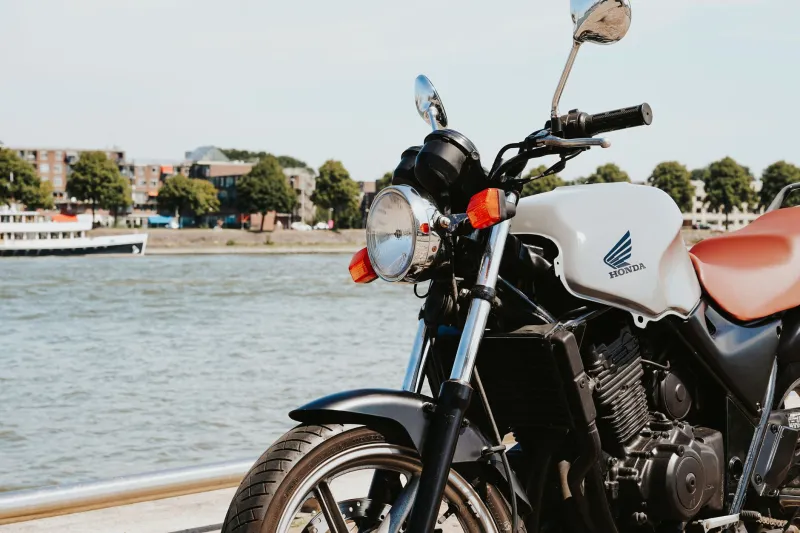
Let's get one thing out of the way up front: five thousand dollars won't buy you a pristine, numbers-matching, show-quality classic. It was never going to. But that's not actually what most of us want anyway.
What five thousand dollars can buy you — right now, in today's market — is a machine with genuine history, real riding character, and enough soul to make every trip to the gas station feel like an event. The trick is knowing which models are undervalued, what condition to accept, and which problems are fixable versus which ones will swallow your budget whole.
We've been watching the classifieds, the auction results, and the swap meet prices. Here's what we're seeing.
Why Right Now Is Actually a Good Time to Buy
The collector market for blue-chip classics — first-generation Mustangs, early Sportsters, pre-unit Triumphs — has been inflated for years, and it's not coming down anytime soon. But the tier just below those headline grabbers? It's remarkably accessible.
Part of what's driving this is generational. The riders and drivers who grew up with certain models from the '70s and early '80s are starting to downsize collections. Bikes that were "just old motorcycles" a decade ago are starting to attract attention from younger buyers who want something tactile and analog in an increasingly digital world. The window where you can buy ahead of that curve is open, but it won't stay open forever.
Another factor: the parts supply for many Japanese bikes from the 1970s and '80s has actually improved in recent years, thanks to reproduction manufacturers and a thriving online community of restorers. That changes the calculus on a rough example significantly.
Motorcycles Worth Hunting
Honda CB series (1969–1982)
The CB350, CB360, CB450, and CB550 are the workhorses of the affordable classic market, and with good reason. Honda built these bikes to last, sold them by the millions, and created a parts ecosystem that still functions beautifully today. A running CB550 with cosmetic issues regularly trades for $1,500 to $3,500. A cleaner example with fresh tires and a recent carb rebuild might push $4,500, and it's worth every cent.
What to check: the carburetors (they gum up badly if the bike sat with fuel in them), the points ignition (or budget for an electronic conversion kit, which runs around $150), and the condition of the frame around the headstock. Surface rust on chrome is cosmetic. Pitting on the frame rails is a different conversation.
Kawasaki KZ series (1976–1982)
The KZ650 and KZ750 are criminally underrated. They're smooth, reliable, and genuinely fun to ride, but they've never quite achieved the cult status of the CB series, which means the prices haven't caught up either. A solid KZ650 can often be had for under $3,000. The KZ1000 — a legitimate performance machine for its era — occasionally shows up in the $3,500 to $5,000 range when the seller doesn't know what they have.
The weak point on the KZ series is the charging system. Budget for a stator and regulator/rectifier inspection before you commit. Everything else is straightforward.
Yamaha XS650 (1970–1984)
This one has been discovered, but it hasn't been over-discovered yet. The XS650 is a parallel twin with a character that punches above its displacement, and the custom and cafe racer community has built an enormous support network around it. Stock examples in rider condition still show up for $2,500 to $4,000. The aftermarket parts availability is exceptional.
Moto Guzzi V700/V750 (1967–1975)
For the rider who wants something genuinely different, an early Moto Guzzi is one of the best values in the market right now. The transverse V-twin layout, the shaft drive, the Italian engineering — it's a completely distinct experience from any Japanese or British machine. Rough examples can be found for $2,500 to $4,000. Parts availability requires more patience than the Japanese bikes, but the community is passionate and knowledgeable.
Vintage Cars Worth Considering
Five thousand dollars is tighter in the four-wheel world, but it's not hopeless — especially if you're willing to buy a project.
Datsun 240Z (1970–1973)
The clean examples are long gone from the sub-$5K range, but rough 240Zs — ones with rust issues, tired interiors, or non-running engines — still occasionally surface in that territory. If you're mechanically capable and patient, a rusty Z can be a legitimate long-term investment. The community support is outstanding, and a restored example is worth multiples of your total investment.
First-Generation Ford Bronco (1966–1977)
This ship has largely sailed, honestly. But early Broncos with significant mechanical or body issues still sometimes appear in the $4,000 to $6,000 range. At the low end, you're buying a project, not a driver. Know that going in.
Early Volkswagen Beetles and Buses
Late-model Beetles (post-1970) in driver condition can still be found in the $3,000 to $5,000 range in most parts of the country. The mechanical simplicity makes them excellent entry points for first-time restorers. Rust is the enemy — check the floors, the rockers, and the battery tray religiously.
What to Inspect Before You Hand Over Cash
Regardless of what you're buying, a few rules apply universally.
Bring a flashlight and use it. Look at the frame welds, the floor pans, the areas behind the engine. Sellers photograph what looks good. You need to see what doesn't.
Cold start is everything. If a seller has already warmed the engine before you arrive, that's a yellow flag. A cold start reveals compression issues, rough idle problems, and cooling system concerns that disappear once everything is up to temperature.
Research the VIN. For cars, a basic history report is worth the $30. For bikes, the VIN can tell you if it's been reported stolen — a real issue in the vintage market.
Budget for the first season. Whatever you pay for the machine, assume you'll spend at least 20-30% of that on immediate maintenance — tires, brakes, fluids, and whatever the previous owner deferred. A $3,000 bike with $1,500 of immediate needs is a $4,500 bike. Factor accordingly.
The Smart Play
The entry-level classic market rewards patience and penalizes impulse. The best deals go to buyers who've done their homework, know what a fair price looks like, and are willing to walk away from a machine that doesn't add up.
But when the right one comes along — a CB550 with solid bones, or an XS650 that just needs carb work and fresh rubber — pull the trigger without hesitation. These windows don't stay open long, and there's nothing quite like rolling out of the garage on a machine that was built before you were born and still has plenty of road left in it.