Two Hours That Feel Like a Lifetime: The Strange Way Classic Bikes Bend Your Sense of Time
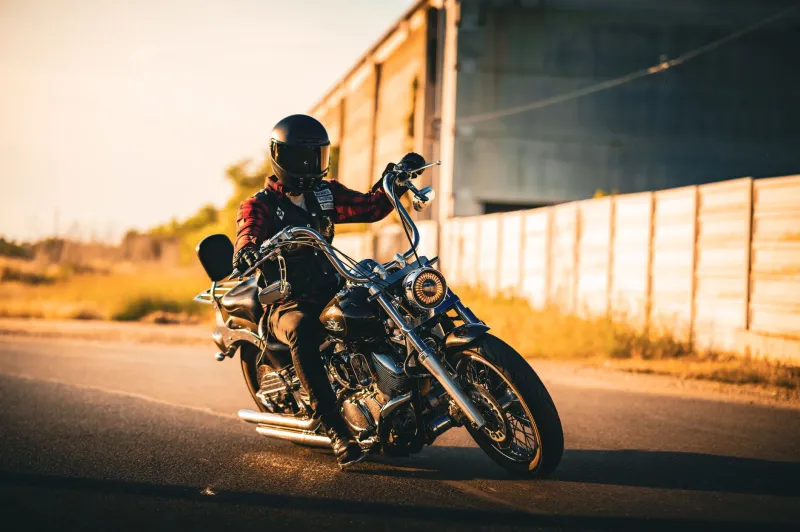
Ask almost any long-time vintage rider to describe their best ride of the year, and you'll notice something odd. They won't tell you about covering the most miles. They won't brag about the fastest average speed. What they'll talk about — usually with a faraway look that makes the people around them a little envious — is how full the ride felt. How a Sunday morning loop through the hill country or a two-lane cruise up the coast packed more genuine experience into a couple of hours than most people get from an entire weekend.
That's not nostalgia talking. That's your brain doing something genuinely interesting.
Why Your Brain Keeps Better Time When It Has More to Do
Neuroscientists who study time perception have found something that vintage riders have known instinctively for decades: the richness of a memory is directly tied to how many new or novel experiences your brain encodes during a given stretch of time. When everything is familiar and automatic — when your environment is controlled, your inputs are filtered, and your machine is doing most of the cognitive heavy lifting — your brain files the whole experience as a single, compressed block. Hours blur together. The ride disappears.
On a classic bike, nothing is automatic. Nothing is filtered. You're feeling road texture through handlebars that don't have a millimeter of modern vibration dampening. You're listening to an engine that communicates in a language of pops, pulses, and tonal shifts that require your constant interpretation. You're managing a carburetor that has opinions about humidity and altitude. You're watching your temperature gauge, your oil pressure, the color of your exhaust. Every sensory channel is open and active, and your brain is logging all of it.
The result? When you sit down that evening and mentally replay the ride, there's so much there. The memory feels long because it was dense. Two hours of that kind of riding leaves more of an impression than four hours of interstate monotony on a modern touring machine with cruise control and a GPS doing the navigating.
What Riders Actually Say About It
Talk to enough vintage motorcycle people and you start hearing the same thing said different ways. A guy in Tennessee who's been riding a '68 Triumph Bonneville for thirty-some years described it like this: "On my modern bike, I can ride from Nashville to Knoxville and barely remember it. On the Triumph, I can ride forty miles and tell you about every single turn. I remember the smell of the fields. I remember the way the engine felt going uphill. It's like the ride actually happened to me."
That's not a small distinction. It's the difference between experiencing something and merely surviving it.
A woman in Colorado who restored a 1972 Honda CB350 a few years back put it differently. She said riding her vintage Honda through the mountain roads outside Boulder felt like "time slowing down to let you actually be in it." She'd ridden modern sport bikes for years before the restoration project, and the contrast hit her hard the first time she took the CB350 out on the same roads. "I covered less ground," she said, "but I went somewhere."
The Road Itself Becomes a Character
Part of what makes classic bike riding so temporally rich is that the machine forces you into an intimate relationship with the actual road surface — not an abstracted, cushioned version of it. Pre-modern suspension, bias-ply tires, and minimal electronic intervention mean you're reading pavement the way a musician reads sheet music. Every dip, every patch, every subtle camber change is information that requires processing.
Modern bikes are engineered to neutralize the road. That's genuinely impressive engineering, and on a long haul, it's genuinely comfortable. But comfort, in this context, is another word for less to remember. The road becomes wallpaper.
On a classic, the road is a conversation partner. The bike tells you what's underneath you, and you respond. That back-and-forth engagement is exactly the kind of novel, active experience that the brain encodes with detail and weight. You don't just ride over a bad patch of asphalt on an old bike — you negotiate with it. And negotiation leaves a mark.
Mechanical Simplicity as a Gateway to Presence
Here's the paradox that classic bike enthusiasts love to chew on: simple machines create complex experiences. A carbureted, air-cooled engine from the 1960s or '70s has none of the electronic sophistication of a modern motorcycle. No ride modes, no traction control, no adaptive anything. And yet the experience of riding one is, for many people, more layered and more memorable than anything a modern machine delivers.
The reason is that simplicity in the machine demands complexity from the rider. When the bike can't adapt to you, you adapt to it. You learn its personality. You develop a feel for its particular version of normal. You start to recognize the subtle signs that it wants a different throttle input, or that the choke needs a nudge, or that it's running a little hot and would appreciate a minute to breathe.
That's not inconvenience. That's relationship. And relationships, even with machines, are how humans make meaning out of time.
The Century Ride Philosophy in Action
There's a reason this site is called Century Ride. Not because we're obsessed with covering a hundred miles — it's that the classic machines we celebrate have a century's worth of riding culture behind them. They carry history in their frames and soul in their engines. When you throw a leg over one of them and head down a road that doesn't show up on a navigation app, you're not just riding. You're participating in something that stretches backward through decades of American riding culture.
And maybe that's the deepest reason these bikes seem to slow time down. You're not just present in the moment — you're connected to every rider who came before you on machines just like it. The weight of that, even when you're not consciously thinking about it, gives the ride a gravity that modern experiences rarely achieve.
Ride Slower. Remember More.
If you've been feeling like your days are blurring together, like weekends are disappearing before you can get a grip on them, the prescription might be simpler than you think. Find an old bike. Learn its quirks. Take it somewhere with good pavement and no particular agenda. Leave your phone in your jacket pocket.
Two hours later, you'll swear you've been gone all day. And you'll mean that as the highest possible compliment.