Chasing Perfect: How the Quest for a Flawless Restoration Keeps Your Classic Bike Off the Road
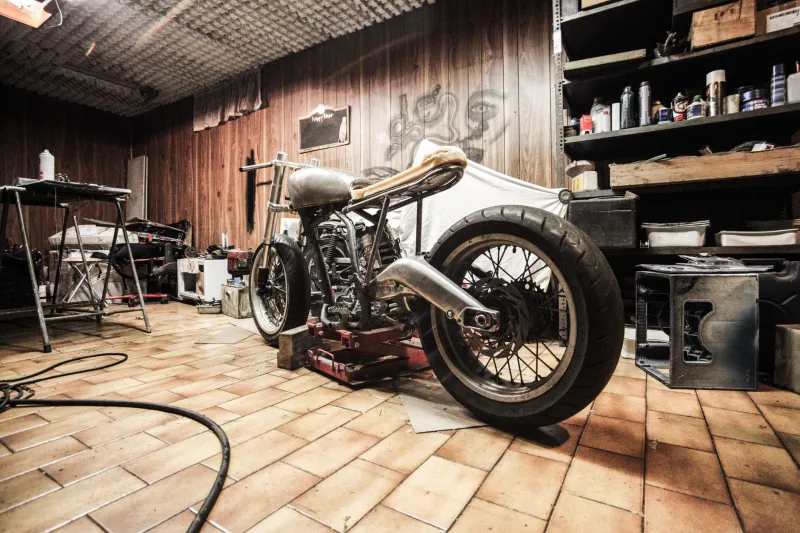
Somewhere in America right now, there's a 1972 Triumph Bonneville sitting on a center stand under a shop light. It's been there for two years. The engine is rebuilt, the frame is powder-coated in a color that took four months to decide on, and the wiring harness is about sixty percent sorted. The owner — a perfectly reasonable human being with good intentions and a genuine love of motorcycles — keeps telling himself he'll have it done by spring.
It's October. Again.
If you've spent any time in the classic motorcycle world, you either know this person or you are this person. The rebuild trap is real, it's widespread, and it swallows more bikes — and more years — than most enthusiasts care to admit.
The Slippery Slope of "Just One More Thing"
Restoration projects rarely announce themselves as multi-year commitments. They usually start with a single, reasonable goal. You pick up a barn-find Honda CB750 with the honest intention of getting it running and rideable. You clean the carbs, replace the petcock, freshen up the chain and sprockets. Then you notice the seat foam is shot. And while the seat's off, you realize the tank has a small dent. And if you're going to repaint the tank, you might as well do the side covers. And if you're repainting, you should address that surface rust on the frame before it becomes a real problem...
This is the classic escalation pattern, and it's almost impossible to see while you're inside it. Each individual decision makes complete sense. Taken together, they add up to a project that never ends.
The cruel irony is that the more time and money you invest, the harder it becomes to stop. Psychologists call this the sunk cost fallacy — the irrational tendency to keep pouring resources into something because of what you've already spent, rather than what actually makes sense going forward. In the restoration world, it plays out as: I've already put $4,000 into this bike, so I can't ride it until it's perfect, because then the $4,000 won't have been worth it.
The math doesn't work, but the feeling is completely understandable.
When "Museum Quality" Becomes the Goal
There's another force at work here, and it lives in the internet. Spend enough time in classic motorcycle forums, Facebook groups, and Instagram feeds, and you'll develop a very specific vision of what a finished bike is supposed to look like. Concours-level paint. Chrome so reflective you can read in it. Every nut and bolt period-correct down to the head markings.
That standard is genuinely impressive. It's also completely disconnected from riding.
A motorcycle restored to show-quality condition becomes almost impossible to actually use. You can't park it at a diner without worrying about gravel chips. You can't ride it in the rain. You certainly can't lean it against a fence post at a state park in Wyoming without feeling a low-grade anxiety that ruins the whole afternoon. The bike goes from transportation and joy to a very expensive, very fragile object that needs to be protected from the world it was built to explore.
Some bikes deserve that treatment. Truly rare, historically significant machines have a legitimate place in collections and museums. But most of the classic bikes sitting half-finished in American garages aren't museum pieces — they're Hondas and Kawasakis and BSAs that were meant to be ridden hard and enjoyed without ceremony.
The Psychological Weight of the Unfinished Project
Here's something restorers don't talk about enough: an incomplete project doesn't just sit in your garage. It sits in your head.
Every time you walk past that half-assembled bike, there's a low-level cognitive load — a reminder of something unfinished, a small but persistent source of stress. Over time, the project that was supposed to bring you joy starts to feel like an obligation. The hobby becomes a second job. And the original reason you got into this — the freedom, the mechanical satisfaction, the connection to something real and analog in an increasingly digital world — gets buried under a pile of parts and indecision.
Some people respond by doubling down, convinced that completion is just around the corner. Others quietly stop going into the garage altogether. Neither outcome is the one anyone signed up for.
Giving Yourself Permission to Ride an Imperfect Machine
The antidote to the rebuild trap isn't lower standards. It's a clearer sense of what the standards are actually for.
Ask yourself honestly: what do you want from this bike? If the answer is to win a trophy at a concours show, then yes, every detail matters and the long restoration timeline is appropriate. But if the answer is to ride canyon roads on a Sunday morning, to feel the vibration of an air-cooled engine and smell the exhaust and connect with a machine that has actual history in its bones — then a bike that's ninety percent cosmetically correct and one hundred percent mechanically sound is not a compromise. It's a success.
There's a term that gets tossed around in restoration circles: rider quality. It used to be slightly dismissive, a way of describing a bike that wasn't quite show-worthy. Increasingly, serious enthusiasts are reclaiming it as exactly what it sounds like — a machine built to the standard of being ridden, not displayed. Paint that's good but not perfect. Chrome that's presentable but won't give you anxiety. A bike you can take to a Tuesday evening ride without a week of psychological preparation.
Rider quality is not settling. It's prioritizing.
Setting a Finish Line That Actually Exists
If you've got a project bike that's been in limbo, here's a practical reframe worth trying. Instead of working toward "done" — a moving target that keeps receding — define a specific, achievable milestone and treat it as the finish line.
Maybe that's: mechanically sound, safely rideable, and presentable enough that I'm not embarrassed to park it at a coffee shop. Write it down. When you hit it, stop. Ride the bike. Let it be what it is.
You can always keep improving it over time. In fact, you'll probably enjoy the process more once the bike is actually in service — because then you're maintaining something you love, not chasing an abstraction.
The classic bikes that have the best stories aren't always the most pristine ones. They're the ones that got ridden. The ones with a scratch from that gravel road in Colorado and a slight oil weep that the owner has been meaning to address since 2019. The ones that have actually seen the open road.
Your bike was built to move. At some point, you've got to let it.